Showing posts with label Elections. Show all posts

Friday, August 16, 2019

Elections Take 2: Game Theory analysis

It's election time, take 2. For those who have joined us late, here's a TL;DR of the situation:

Aaaaaaaaaaaahhhhhhhh!
Ok, here's a little more detail:
Israel had elections on 9 April 2019. Even though the "right wing" bloc had comfortably enough seats to form a government, Avigdor Liberman (Yisrael Beitenu) decided that he would not sit in any government with the Haredi parties. His 5 seats were required for a majority, so Likud's Binyamin Netanyahu could not form a coalition without involving parties to his left, and none of those parties were interested. So rather than allowing Benny Gantz of Kachol Lavan (Blue & White) to have a chance at forming a coalition, Netanyahu had the 21st Knesset dissolve itself, and new elections were called for 17 September.
Netanyahu was hoping that the outcome of the next election will make it easier for him to form a coalition. So, how's that working out so far? As it turns out, very well for Liberman, not so well for Netanyahu. As always, Israel is obsessed with polls, of which several get published every week. For the purposes of this discussion, I'll work with the poll showing the most optimistic numbers from Netanyahu's perspective, which I lifted off the Yisrael Hayom website:

Credit: Yisrael Hayom


This Channel 12 poll from 3 August shows Netanyahu with a total of 57 seats, if you exclude Yisrael Beitenu. And as I said, that's the most optimistic one for him. If the polls are accurate, Netanyahu still has no path to a right-wing coalition, unless Liberman suddenly decides that he's willing to climb down from his anti-Haredi tree. And why should he, seeing as his hardline stand seems to have literally doubled his support? No, Liberman has found what he thinks is a winning formula, and he will stick with it.

What about Gantz? Could he form a centre/left coalition? Here the answer is an even clearer No. His problem is the hate map among his prospective partners. It's like this: The Democratic Camp (heir to Meretz) won't sit with the Haredim. Nor will Liberman. And if there's anyone Liberman hates more than the Haredim, it's the Arabs. And even if he could be persuaded to sit with the Arabs, the United Arab List is too stuck in their anti-Zionist rejectionism, and under their current leadership, will not join any Israeli government. Gantz's optimal non-conflicting coalition is B&W, Labour, Shas, and UTJ, for a grand total of 50 seats. It's not happening for him.

So, back to Netanyahu - how else could he form a coalition? Well, logically speaking, if he can't do it with parties to his right, then he'll have to turn to his left. He has two realistic options here: B&W and Labour. Each has its advantages and disadvantages.

B&W is closer to Likud politically than Labour. A Likud/B&W coalition could potentially form a government without involving any smaller parties. If they need to bring in anyone else, Ayelet Shaked would be the obvious choice. Not Liberman, because I suspect Netanyahu would want to punish him for getting us all into the mess in the first place. Plus, he's shown himself to be an unreliable coalition partner in the past.

The biggest problem with B&W is that they will come with a big asking price, most likely a rotation deal for Prime Minister. And Netanyahu most certainly does not want to give up his job. That will be a deal breaker, in my opinion.

Labour, on the other hand, has embarrassingly little bargaining power, and cannot come with huge demands. If they ask too much, they will get nothing. I can easily see a situation where Netanyahu offers Amir Peretz some obscure post like the Welfare Ministry, and maybe something else peripheral like Agriculture for one of his cronies, in order to sit in the government. Peretz has two choices: a nice ministerial salary to see him comfortably into his retirement, or the glorious distinction of being the leader of the smallest faction in the Opposition. Whichever path he chooses, Labour will kick him out as leader before the next election (as appears to be their custom), so he really has nothing to lose. He'll come up with some rationalization about why he's joining a right-wing/Haredi government, and jump on the gravy train, as befits a good socialist. And that is Netanyahu's path to 61.

Now, you might think we're done here. But this is just where the fun begins. It's time to play Rational Pirates! BUWAHAHAHAHAAA!

Arrr! Shiver me timbers!
Of course, I'm referring to the famous Pirate Game, and if you don't know what that is, you should visit the link. I'm casting Netanyahu and Gantz as the Rational Pirates in our story.

Netanyahu knows he has a path to 61, as described above. But it has its problems. He needs five parties, including his own Likud, in his coalition, they all have their agendas pulling in different directions, and any one of the other four could bring down the government at the drop of a hat. Make that five other parties, since Yamina is just a technical bloc, and once they're in the Knesset they can function independently as the New Right and Bayit Yehudi. Running a government that is constantly beholden to the demands of five other coalition partners will not be easy. Wouldn't it be nice if he could just have one big partner--Blue & White--and not have to bother with those pesky little nudnik parties? If necessary, he could just pull in one other small party, maybe New Right, maybe Bayit Yehudi, to make his 61.

But Gantz wants a rotating Prime Minister position! "Well," Netanyahu can tell him, "I don't need you to form a government. I already have my path to 61, with Labour. But I'd prefer to work with you. We're not that far apart on most issues of substance, and together we can make a coalition that is not beholden to the whims of smaller parties, for the greater good of Israel! Rotating premiership is off the table, but you can have the Defense Ministry and even the Foreign Ministry. Of course, if you'd prefer to be the Leader of the Opposition instead for the next four or five years, that's fine...but chaval al hazman..."

Now Gantz has a quandary. He's made a lot of pronouncements about refusing to join a coalition with Netanyahu. But this really is a great opportunity to form the government that Middle Israel desperately wants. Free from the political demands of the Left and Right fringes; unencumbered by the budgetary needs of the Haredim. How will history remember him? As yet another Opposition leader who never made any impact? Or as the hero who put aside his personal differences with his political opponents, for the greater good?

Gantz nods sagely, then extends his hand to Netanyahu. "You've got a deal," he says. And this is how a coalition is formed between Blue & White, and maybe one other small party.

Alternative scenario: Zehut and Otzma Yehudit pass the threshold

All the above assumes that the smaller ring-wing parties, Zehut and Otzma Yehudit, fail to pass the 3.25% voting threshold. But what if they do? They immediately arrive on the scene with 4 seats each. Those 8 seats will come more or less proportionately off the rest of the parties. Let's say everyone else on that poll loses 1 seat, other than the Arab List (just for argument's sake). Now Netanyahu technically has a path to 61 with just right-wing parties: 29 Likud, 11 Yemina, 6 Shas, 7 UTJ, 4 Zehut, 4 Otzma. But it doesn't really change much from our previous scenario, where Labour filled in the gap; in fact, the optics of forming a coalition with the Kahanists are so bad that Netanyahu would arguably prefer to have Labour in the coalition rather than Otzma. Plus, he hates Moshe Feiglin of Zehut. So it's back to the Rational Pirates game, with pretty much the same inputs as before.

So it seems all roads lead to the same outcome: a Likud/Blue & White coalition, with Netanyahu as Prime Minister.

Of course, anything could happen in the next month, and the seat distribution could be wildly different from current polling. We'll take a look at that after 17 September. See you then!

Credit: Jpost

Tuesday, April 2, 2019

Election fun!

Seven talking points about the election on April 9

A lot of people are talking about how disillusioned they are about next week's general election in Israel, how no party really deserves their vote, and how bad and dangerous certain candidates or parties are. I have a different take on things that is a lot more upbeat. Here are seven talking points for your consideration.

1. The polls are (mostly) rubbish

One of the best things that has come out of this election is the legal ruling obtained by the Green Leaf Party early in the campaign, requiring (among other things) that polling companies release their raw data, not just their final calculations. While most of the media doesn't report on the raw data anyway, it's available, and extremely interesting. 

For example, I present you with Exhibit A, the raw data from a Channel 13 poll taken on 28 March:
The leftmost column is the percentage of respondents who chose the selected option; the middle column is the number of seats they are allocated, based on their raw data. Loosely. Very loosely.

The first thing I will draw your attention to is the contrast between the results of UTJ and the New Right. In the raw data, UTJ scored 3.8%, while NR got 3.7%: a virtual dead heat. Yet in the allocation of seats, UTJ gets 7, while NR gets only 5! Now, this is not necessarily gross misrepresentation; after all, UTJ supporters are particularly difficult to poll, since very many of them do not use the Internet, and do not have SMS-capable phones, so it is probably correct to bump their numbers up somewhat. But how much? That's a question for the judgement of the pollsters.

Where it gets a little more dodgy is how Likud (21.6%) and Blue & White (25.5%) both ended up with exactly 30 seats. Or how Zehut (7.5%) and Labour (7.8%) were allocated 7 and 10 seats respectively. I suspect the pollsters are taking the 9.1% of "Undecideds" and allocating them to other parties according to their best judgement. Or according to their own political preferences. Or according to groupthink. Whatever. Whether the data manipulation is innocent or nefarious, it's pretty clear that polling is not an exact science. Expect results that are nowhere near the conventional wisdom.

2. The media hype about the Left/Right blocs is utter rubbish

Cartoon: Philip Whisenhunt, The Commonwealth Times
Every poll gets trumpeted in the media as a scorecard of how many seats are in the "Right" bloc, and how many are in the "Center-Left" bloc. So, for instance, the above poll would be announced as "Right bloc leads 64-56". If they're feeling really adventurous, they might call Zehut the "balance of power", since its leader, Moshe Feiglin, has said he has no preference between Binyamin Netanyahu or Benny Gantz for Prime Minister, claiming that the score is "Right 57-56 Center-Left", with Zehut being the kingmakers. Sounds really close and competitive, right?

Well, it's all utter rubbish, because they are ignoring the fact that the Arab parties are less concerned about serving their constituency than about grandstanding against anything and everything the government does, and will never join any coalition, whether "Right" or "Center-Left". This is a great pity; I've said often that it would be really cool if a right-wing government could co-opt at least one Arab party into the coalition with some harmless portfolio like Minister of Welfare. But it isn't happening any time soon, at least not with the current crop of Arab politicians, so those 11 seats in the poll above are spoilers, and cannot be counted in any "bloc", other than their own. So why does the media keep harping on with this ridiculous scorecard? Because it keeps things exciting; it sounds so much more like a cliffhanger than if they had to tell the truth, which is "Right 64-45 Center-Left".

3. There are no (really) bad scenarios

Photo credit: JPost
I don't believe in trash-talking, not even directed against politicians, and I'm not going to start now. Fortunately, I don't feel much temptation to do so, either. I have friends who support almost every one of the major parties, and I have not attempted to persuade them otherwise, because all the party lists contain some excellent people, who really love Israel, and sincerely want to do their best for the country. They also have a lot of candidates I don't like, but it's unrealistic to expect to like every single candidate on your party list. I may disagree with their approach, but who's to say I know better than them? At the very least, I don't see anyone on the map who both (a) has an agenda that I believe will be seriously detrimental to Israel, and (b) will likely have the power to implement that agenda. The most serious concern I have is that the Blue-and-White party might install a trade union boss as finance minister, but I don't see that as a realistic scenario. As mentioned above, it seems to me that Netanyahu is a shoo-in to form the next government, but if it happens to be Gantz, I'm not too concerned; he would almost certainly have to rely on Feiglin to make his coalition, and Feiglin's price will include the Finance Ministry. Having Feiglin in the government also assuages any concerns I might have that a Gantz-led government would do anything too reckless on the diplomatic front. So, barring some kind of black swan event, I'm pretty relaxed about whatever outcome this election yields.

4. Zehut is a game-changer

That brings me to Feiglin and Zehut. Without getting into arguments for or against any aspect of their platform, I think it's fair to say that Zehut's entry into Israeli politics is a massive game-changer. Firstly, the fact that they even have a manifesto is, amazingly enough, unprecedented. Every other political party only has a list of personalities; you vote for the people and hope they do in office what they intimated they might do while they were campaigning. Zehut has a 344-page platform, spelling out exactly what policies they have committed themselves to. We'll see how good they are about following through on their commitments once they're in office, but one way or another, I hope more parties do the same in future, rather than asking us to close our eyes and open our mouths.

Just one of hundreds of Zehut memes
Secondly, Zehut has whipped up both support and opposition to levels of near-hysteria. You can't post a kitten video on Facebook, without some Zehutnik friend of yours commenting about how life will be better for cats once Zehut runs the country, see page 271 of the platform #מצביע_זהות. To which your Meretz friend responds, calling the Zehut friend a messianic fanatic who wants to build the Third Temple. Then a United Right friend accuses him of being a pothead who wants to destroy Judaism in Israel, followed by a Likudnik berating Feiglin for his anticipated betrayal of the Right, while a Blue & White supporter says Zehut is a dangerous cabal of extreme Rightists who will bring the apocalypse down on our heads. Seriously. Somehow, Zehut has stirred up the pot so much, that literally every other political party feels threatened by them, and the accusations against them are diametrically opposite, depending from direction they originate. That itself speaks volumes. Plus, it's hugely entertaining.

Thirdly, no party before has gone so hard for the jugular in terms of their libertarian agenda to root out the ugly vestiges of socialism in Israel. They are aiming for the Finance Ministry, and there is good reason to believe they will get it. And from there, I am very optimistic that they will liberalize the economy, removing the protectionism, tariffs, and other obstacles to the individual's economic success. Bring it on.

To the people who are worried about Zehut's proposed solution to the Palestinian issue, I get that concern. But, much like Blue & White's union boss is unlikely to become finance minister, I don't see Zehut dictating foreign or security policy any time soon, and they haven't prioritized those issues on their agenda. They're going for finance and education, and in both of those fields, I think they will be an excellent force for good.

5. There is life after Netanyahu

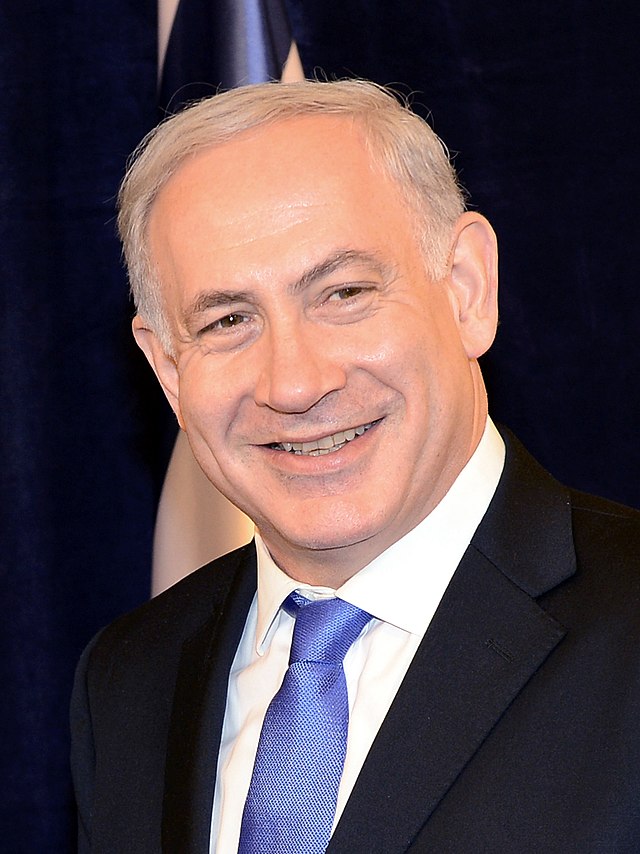
Credit: Wikimedia Commons
The election has been complicated by the legal cloud hanging over Netanyahu's head, though that doesn't seem to have affected his likelihood of reelection much. Nonetheless, the indictment against him carries some serious weight. Noah Roth posted an excellent and balanced analysis of the case here, and its really worth reading. 

The bottom line is that even after winning the election, Netanyahu could well be forced out of office. And if he is, the next prime minister will likely be determined by primary elections within the Likud. Are you a Likud member? If so, you may be treated to the privilege of directly electing the next leader of Israel. And despite the fact that many first time voters don't even remember a time when Israel had a prime minister not called Binyamin Netanyahu, everything will be OK. There are a lot of very good and highly qualified candidates in the Likud, and even some who speak English as well as Bibi. Netanyahu has been a very good prime minister, in my opinion, but even without his legal issues, he should have been term-limited. It's not good to have the same person in power for too long, and some fresh leadership might be nice.

6. Not much else will change

As mentioned above, Zehut's likely takeover of the Finance Ministry has potential to make some big impact on the economy. Plus, they've made cannabis legalization a sine qua non condition of entry into any coalition, and nobody is really that strongly against it, so I think it's safe to say we'll soon see pot on sale in pharmacies within the next year.

Other than that, I don't see many other policy initiatives making much headway. The Charedi parties will likely be indispensable to any coalition, so I cannot foresee any major changes to the status quo as far as social or religious legislation is concerned. The Likud will remain in control of security and foreign policy, so expect more of the same there. Ayelet Shaked is banging war drums against the High Court, but I don't foresee her achieving much more of a judicial revolution in her next term of office than she did in the first one. 

The really big unknown factor, of course, will be the unveiling of Trump's Middle East Peace Plan. I have no idea what's in it. Those who do know, aren't saying, and those who say, don't know. But that's one thing that has the potential to set the cat among the pigeons.

7. Relax, everything will be fine!

Credit: Chabad.org
This election is characterized by the fact that there aren't really any probable nightmare scenarios, which hasn't always been the case in past elections. Most of the candidates are actually pretty decent, and whatever happens, things will be fine.

It's not worth getting into heated debates on social media. Our relationships with our friends and neighbors will continue past April 9; it's really not worth burning them over one or two votes here or there.

Shalom al Yisrael!

Thursday, October 18, 2018

Needed: a clear Haredi majority in Beit Shemesh

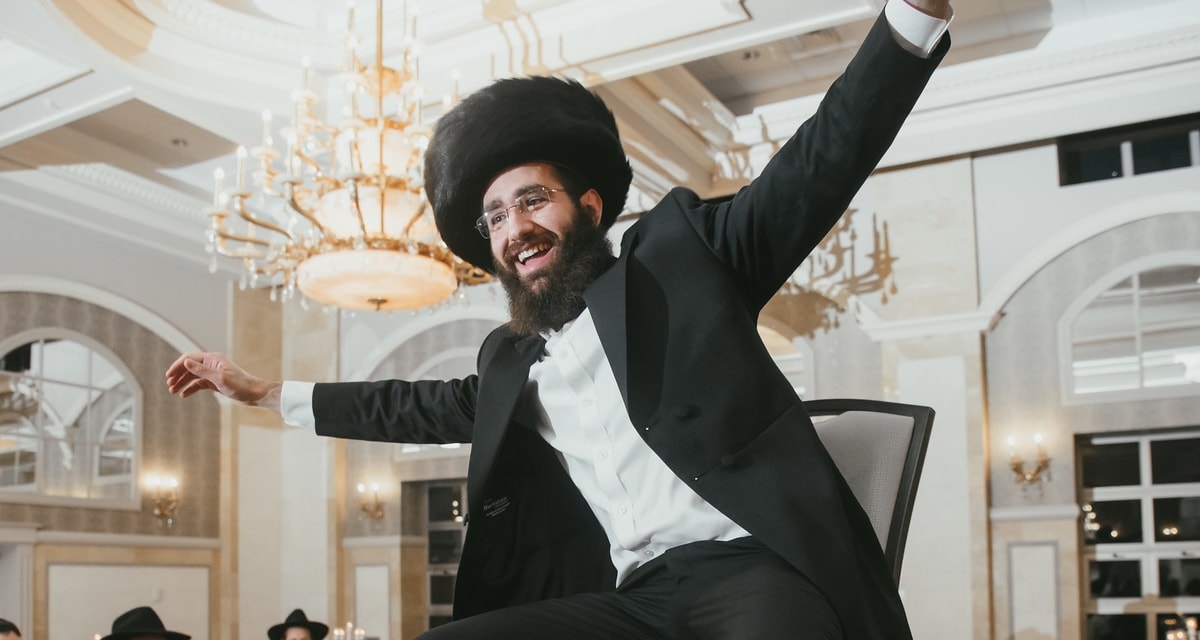
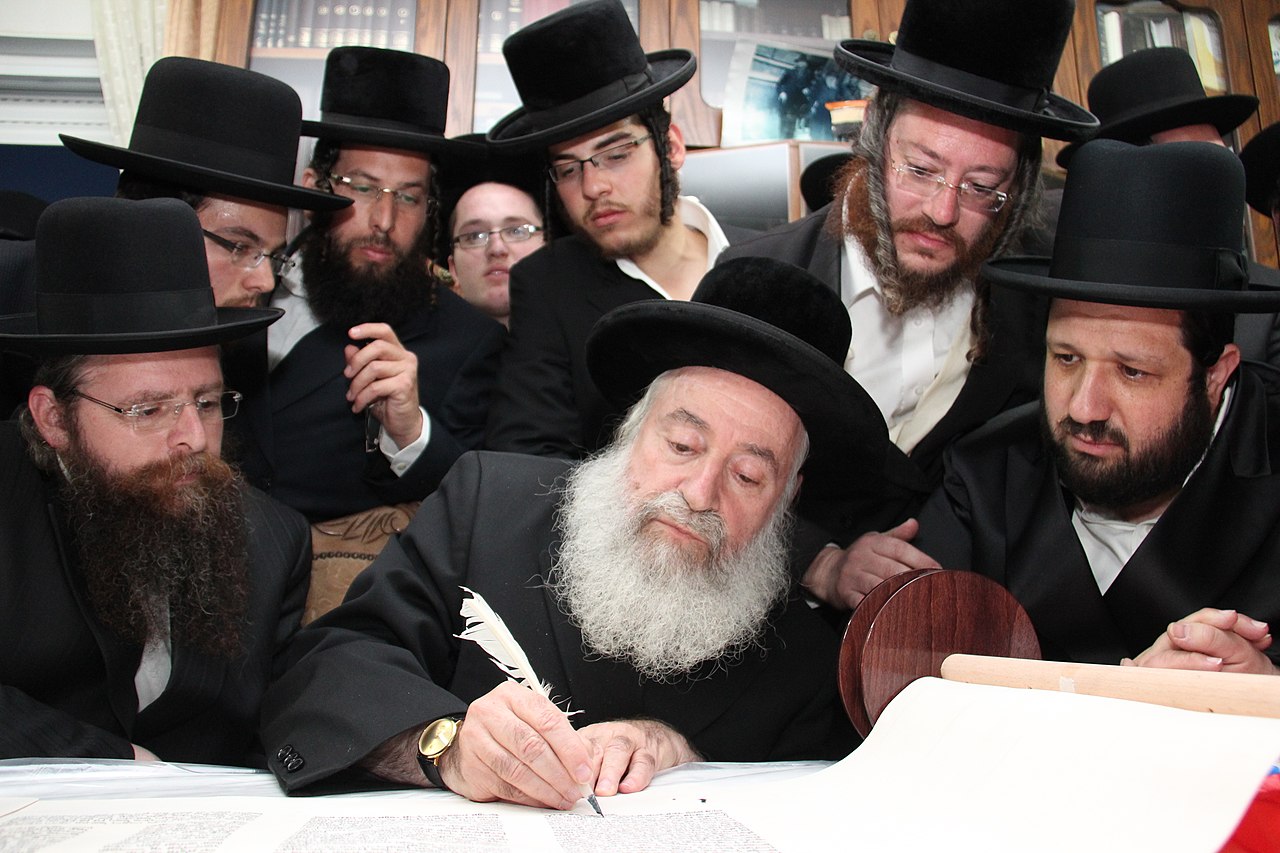
Just stam a picture of some random Haredim
because I like pictures in my blog posts.
Credit: Wiki Commons
That's a deliberately provocative headline, and I mean it--but not for the usual reasons.

Let's take a couple of steps back. We're currently less than two weeks before local council election day, which in Beit Shemesh pits incumbent mayor Moshe Abutbul against challengers Aliza Bloch and Malachi someone-or-other. The fundamentals of the debate are as follows: the Bloch camp claims that Abutbul has done a bad job as mayor, and she will do better; the Abutbul camp claims that he is Haredi and the Gedolim say you must therefore vote for him. And the third guy says something, I think.

I'm not going to bother with analyzing the Bloch camp's arguments, because there are many points to be made in both directions, and it is a fair matter for debate whether Bloch would be a better mayor than Abutbul. Abutbul's claims, however, are incontrovertible: he is verifiably Haredi, and I have no reason to believe he's lying about the endorsements he claims to have received from all the senior Rabbonim that the Haredi community cares about. To simplify it further: Bloch is appealing to voters' reason, while Abutbul is appealing to their identity. And identity always trumps reason, in terms of persuasion.

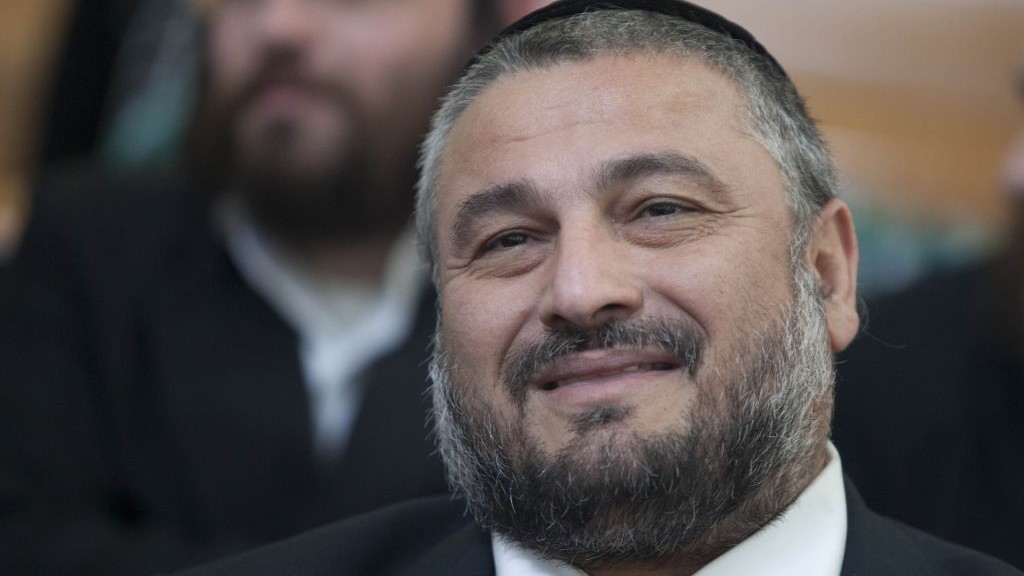
Incumbent mayor Moshe Abutbul
Credit: Times of Israel
My prediction, therefore, is for an Abutbul landslide, with a victory margin of around 10%. The Haredi community is the most disciplined voting bloc in the country (and possibly in the world), and with few exceptions (notably including the Anglo-Haredi sector), once given their marching orders, they will turn out in force and vote as they have been instructed.

This situation is profoundly saddening to me, not because of the likely outcome, but because the election will be decided on tribalism rather than issues. That's not a good thing for a democratic society. But it will continue this way, election after election, as long as the non-Haredi sector keeps putting up candidates who are inherently doomed to fail.

But it's not all bad news. At some point, perhaps even in five years' time, the non-Haredi sector will give up, thus firmly establishing Beit Shemesh as a Haredi-controlled city. At that point, only Haredi candidates will be viable. Consequently, there will be nothing to compete about in terms of tribal identity, which is the most important area to the dominant voting bloc. What's left? They'll actually have to compete on real issues. Wow.

Good news for the Jews!
Credit: Times of Israel
It gets better. Up till now, in a straight Haredi vs non-Haredi fight, the Haredi bloc has actively alienated and even demonized the non-Haredi sector, and vice versa. That's not good for anybody. But once the battle is between only Haredi candidates, the monolithic Haredi vote breaks down, and suddenly the non-Haredi voters become the kingmakers. The candidates will have to court the non-Haredi vote. The mayor will have to deliver for the non-Haredi community. Counter-intuitively, once the city is Haredi-dominated, the non-Haredi residents will wield disproportionate power.

My purpose in writing this is not to convince anyone to vote differently. You should vote for whoever you think is the best candidate. But when Abutbul wins handily, don't lose heart. The bigger his victory margin, the better for all of us, because only when we learn to accept and live with the new reality, that Beit Shemesh is a Haredi-majority city, do we have a chance of moving past tribalism and into meritocracy.

Wednesday, March 11, 2015

Machiavellian vs Zen voting

You would think it would be a simple thing deciding who to vote for: just find the party whose principles resonate most with you, or whose past performance has impressed you the most, and vote for them.  Easy, isn't it?

Well, no.  Both Likud and Machaneh Tzioni are arguing that you should vote for them, rather than their smaller natural allies, to ensure that they are the largest party in the knesset, and will therefore be given the opportunity to form the coalition.

Fortunately that canard is easy to debunk, as I have done before, but despite the incontrovertible evidence provided by real life experience as recent as Kadima's 28-27 "victory" over Likud in 2009, the media persists in maintaining this false narrative, so many people swallow it because of the Availability Cascade cognitive bias (i.e. the more you repeat a given statement, the more people tend to believe it is true).

But now I have another dilemma.  I fundamentally disagree with Eli Yishai's economic and social platform, and I find Baruch Marzel a little too extreme even for my tastes.  But I would prefer for these two fellas to be in the Knesset rather than a couple of extra left-wingers.  And here's the rub: according to the last polls released before the 7-day blackout on surveys before election day, Yachad is hovering on the edge of the electoral threshold.  If they make it over the required 3.25%, they will have at least 4 seats.  If they don't, those 4 seats will be divvied up proportionately among those who did make it.  Which means, assuming a roughly 50-50 split, that 2 of their seats will go to people I strongly disapprove of.

Under normal considerations, my single vote cannot be more than the tipping point for one Knesset seat to change hands (or bottoms).  In this case, however, my vote could constitute the tipping point for 4 whole seats!  So maybe I should refrain from voting for my first-choice party, and rather vote for a party that would otherwise be my fourth or fifth choice, just to help them get into the Knesset and strengthen the overall "right wing" bloc?  The argument is not without merit, even if it's not compelling.

But then... there's the law of unintended consequences.  For example, not so long ago everyone was calling for Bashar al-Assad to be deposed in Syria.  Now all of a sardine, everyone's gone quiet on that score.  What happened?   Islamic State, of course.  Who ever thought there could arise and even more vicious, cruel and despotic regime than Assad's?  Yet if he had fallen when the hounds were out for his blood, all the indications are that IS would have taken full control of Syria, as they have in Iraq where the West deposed another cruel and bloody dictator, and we would have had the richest, best equipped, most full-tilt nut-job Islamist terrorist organization in the world massing on our border.  Good thing we didn't get what we wanted, huh?

Similarly I could make the case that, Netanyahu's capacity for Churchillian oratory notwithstanding, perhaps the best thing for Israel is for him to lose power now, and Herzog to become prime minister?   Bear with me on this.  It's not too difficult to conjure up a scenario where Netanyahu would do a Sharon, and make a suicidal deal with the Palestinians.  So half the Likud would revolt -  big deal!  He would be able to pass the deal with the support of the Left and the Arab parties.  Herzog, on the other hand, has no such leeway, because as PM he would be battling everyone to the right of him, plus he would have a few security hawks in his own coalition who would need some serious persuasion.

Also, Netanyahu is right now the unchallenged leader of the Right.  He's unchallenged, because nobody can challenge him.  What, try depose a charismatic and powerful sitting prime minister from your own camp, who is received with wave after wave of standing ovations in Congress?  Obama didn't ever get that kind of reception, even when the Dems controlled Congress.  Moshe Feiglin challenged Netanyahu, and look how that worked out for him.

But if he were to lose, it would open up the playing field to other leadership contenders.  Herzog would maybe be able to hold together a coalition for two years, at the outside, and then we'll be back to new elections.  This would allow a new rising star to take over the leadership of the Right, perhaps someone more ideologically driven, with a fresh perspective and new momentum.  Like Feiglin, or Naftali Bennett, or who knows who else?  Maybe even Tzipi Hotovely?  It might be worth a couple years of watching Herzog trying to keep his government together, once the hate-Bibi glue has expired, and now all the conflicting demands of his coalition partners start playing off against each other.  Heck, the entertainment value of that might even be the payoff by itself!

I'm not trying to predict the future here or advocate a contrarian voting position; that's not the point.  All I'm saying is, there are so many different ways that things can play out, and trying to go Machiavellian on it is not guaranteed, or even highly probable, to lead to a better outcome; in fact, it could backfire seriously.

So I've made my decision: I will be a Zen voter, and simply vote for the party I feel best represents my views, and let the chips fall where they may.  And I respectfully submit that you should do the same.


Thursday, February 5, 2015

It's election time - and I don't care!

For a person like me who is usually almost OCD about following the polls and election news, this is a completely new and liberating experience:  I have almost no interest in the daily reports about our upcoming elections.  I arrived at this happy place when I realized that it simply doesn't matter.  All the hype in the media about the day to day incremental polling trends, and what this politician says about that one, is irrelevant.

It's frankly a little embarrassing to see so many intelligent people making so much noise about whether the "Zionist Camp" or Likud will get more seats, as if that makes any difference.  Like, don't they remember what happened in 2009?  Kadima under Livni got one seat more than Likud under Netanyahu.  Does that mean they won?  No; Kadima got the most seats by cannibalizing votes from their natural coalition partners, Labor and Meretz.  So when it came time to form a coalition, Livni was stranded, and Netanyahu became Prime Minister again.  So too today: even if Yitzhak Herzog gets a couple seats more than Netanyahu, it won't make a shred of difference: the only thing that counts is how many total Knesset seats he will be able to command for a coalition.  And in those stakes, Netanyahu is king.  Between his natural coalition partners (Bayit Yehudi, Yisrael Beiteinu, Koolanu, Ha'Am Itanu) and the Haredi parties, their total poll numbers have consistently been hanging around the 70 mark, give or take a couple.  (Link to a great poll-of-polls analysis over time here, thanks to DG and ED.)  So barring some really major "black swan" event, I think we can pretty safely say that the large print of the day-after reports will probably read "Netanyahu re-elected Prime Minister".

The small print may be of slightly more interest, but not much.  The biggest swing factor will be whether Ha'Am Itanu makes it over the bar, but otherwise the trends are pretty much in a holding pattern.  A handful of seats may be swinging between various parties, but the overall picture is consistent: the government will once again be formed of a hodgepodge of medium and small parties.  They will thrash out a coalition agreement that nobody will be particularly happy with, and within a year or two, the government will once again fall due to internal bickering, and we'll be back at the polls.

Even if I'm wrong, and Herzog does manage to cobble together a majority of the Knesset to support a coalition under him, I don't really care.  His coalition would somehow have to include even more fractious partners, like Lapid with the Haredim, or Liberman with Meretz.  They wouldn't be able to do anything significant or dangerous, and the government wouldn't last long enough to give Livni even a day at the helm.

Netanyahu's proposed legislation to change the electoral system may or may not pass, but once again, it won't matter.  I know I'm pitting my intelligence against a guy who reportedly has a 180 IQ, but I simply cannot fathom how he thinks it will help to crown the leader of the largest party as Prime Minister automatically, even if he can't form a majority coalition.  Does it mean that the government will be able to pass laws even without a majority?  That's unthinkable; it means the Knesset might as well pack up its bags and go home, and you're effectively stuck with a dictatorship for 4 years.  But if you do need a majority to pass laws, then how will it help if the nominal Prime Minister cannot command that majority?  If anyone can educate me as to what subtle point I am missing, I'll be most grateful, but right now this idea looks pretty asinine.

So the cycle will repeat itself, returning to elections every couple of years that produce the identical outcome as the time before, with minor power shifts and flavor-of-the-month "centrist" parties rising and falling, until maybe someone significant decides to pursue the idea of switching to district representation, an event for which I have faint hope, for reasons I have explained before.

Perhaps my most compelling reason for getting excited about elections in the past was because each time was an opportunity for Moshe Feiglin to get elected.  He did, and performed superbly - and then he got ousted by the Likud and is not running in these elections.  So I really do have no horse in this race.  I haven't decided who I'll vote for, and when I do, I probably won't feel any need to advertise or proselytize, because it won't make any difference overall.  I do hope Feiglin will return to the scene with credible force next time around, because I think he's the one person who really has potential to shake up the system.

But until then, I'm watching the elections as a movie-goer watches an entertaining historical film.  Without any emotional involvement, without any need to trash-talk anyone, relaxed, and happy!


Saturday, December 13, 2014

My Election Challenge

A few days ago a friend of mine remarked to me how much he hates elections.  "We're going to have three solid months of sin'as chinam now," he lamented.  I have been reflecting on his words, and thinking, does it really have to be this way?

A few months ago, the whole of Israel was united as one for 18 days, while we searched and prayed for Eyal, Gilad and Naftali.  כאיש אחד בלב אחד - like one person with one heart.  It didn't matter if you were secular, Dati Leumi or Charedi, left-wing or right-wing.  And we were all broken hearted together when the terrible news became known.

Why should it be that we can only be united when we are faced with crisis and tragedy?  Why should we shatter that unity just because we are choosing a new government?

Think positive - Talk positive - Be positive
Let's fantasize for a few minutes.  Imagine that for the next three months of electoral campaigning, all parties and candidates would present themselves with compelling and positive arguments why you should vote for them, without demonizing, excoriating, ridiculing, lambasting or even criticizing their competitors.  Imagine complete mutual respect between all political parties, and everyone being particular to disagree about issues, and never descending to ad hominem attacks, let alone smearing entire communities.  Imagine if all of us armchair political commentators, on blogs, Facebook and talkbacks, would hold ourselves to this standard of always writing respectfully and gracefully, really trying to understand the other person.  And where we must disagree, then agree to disagree - and yet always treat the other as befits a tzelem Elokim, someone created in the image of God.

את חטאי אני מזכיר היום; I confess I have been guilty of publicly besmirching political figures in the past.  I therefore wish to apologize in the same forum for my past transgressions.  I am sorry for speaking loshon hora and adding fuel to the fire of baseless hatred.  And I undertake to change my ways.  Any time I feel the need to post something, I will keep my contributions as much as possible to the positive presentation of good ideas, and if I feel the need to criticize something, I will weigh up if it is really necessary and beneficial to air my views in public, and if it is, I will confine myself only to arguing about the issues, and never attacking the person.

I hope you will join me in this.  The satan is already rubbing his proverbial hands in glee, in anticipation of all the division and hatred that usually accompanies election season.  For every person who is able to overcome their nature and restrain themselves from saying or writing things that will increase machlokes, but rather relates to people with whom they disagree with honor and respect, we will surely increase the merits of Am Yisrael.  And who knows?  Maybe our reward will be a that we get a stable, functional government whose leaders and ministers will likewise care for the needs of all sectors of the population.  That idea sounds almost like Messianic times, doesn't it?


Wednesday, December 3, 2014

The Kachlon Conspiracy

Rafi asks a great question:
If Moshe Kachlon is so smart and talented, and I think he probably is, along with charismatic and dynamic with leadership abilities, why is he starting a new party?
I mean, doesn't he see how all these new parties were basically one-time wonders and then faded into obscurity? even the most successful of them all, Kadima, barely made it through two elections.. why does he think his party will be any different? He should have stayed with the Likud.
The worst part of it is that a guy like Kachlon, and the big names who I am sure will be on his list, will soon fade into obscurity just like those all before him, and that would be such a loss to the political system.
I was originally going to answer in the comments on his blog, but the more I thought about it, the more I figure the answer deserves a blog entry of its own.

My answer is not that Moshe Kachlon isn't smart or talented.  It's that Binyamin Netanyahu is extremely smart (he reportedly has an IQ of 180), and knows how to plan for the future.

First up, let's rewind a few years to before the previous elections, and put ourselves into the shoes of a genius-intelligence Prime Minister.  You look at the polls and conclude that you're going to sort-of win the coming elections, but be stuck with yet another scrappy coalition.  Every election it's the same thing: some new one-hit-wonder party claims to represent the disaffected "center", "middle class", or whatever, and walks off with a chunk of swing seats that is big enough to make or break a coalition.  This time it's Yair Lapid.  Last time it was Olmert with Kadima.  Before him was Tommy Lapid and Shinui.  And all of them come with their demands that you simply cannot ignore when drawing up your coalition agreement.  Wouldn't it be nice if for once, just once, the new kid on the block turned out to be someone who is ideologically aligned with you, and will actually play nicely once he's in government?

Hmm... thinks... what if, what if... what if I had to prepare already now for the election after this one?  I'll have to make do with a coalition with Lapid this time around... but why not prepare the ground already for next time, and have someone friendly lined up, ready to take the swing votes?  But who?  Someone popular, someone whom I can trust... wait!  What about... Moshe Kachlon?  We'll have him resign gracefully from politics for the time being... make noises about how we regret his decision and hope he'll reconsider... and then next election, he can start his own party, ride on the his popularity that we'll cryogenically freeze now... and he can take the regular 15-20 seats reserved for the flavor-of-the-season "centrist" party... and then yesh lanu esek!  No more need to lean on whiny, treacherous coalition partners... at last we will have a stable government!

So what do you think of this benign conspiracy theory?  Here are some backup facts: Moshe Kachlon is a stalwart Likudnik, whose economic and social views to date have been very much in line with Netanyahu's.  He's not your typical "centrist"; in fact, he was one of the 13 Likud loyalists who voted against the Disengagement.

If I'm right, Kachlon will be given a very senior position in the coming coalition.  And as to the point Rafi raised that he will disappear into obscurity at the next elections - that's only if he doesn't merge his party into the Likud, and grab a spot at the top there.

But then what will be with the next election?  Who will grab the "center" vote if Moshe Kachlon is tainted by his return to the Likud?

Why, Gidon Saar, of course...


Thursday, October 17, 2013

Two Beit Shemeshes, not on speaking terms

Municipal elections are less than a week away.  For me, they can't be over soon enough.

There have not been, to the best of my knowledge, any truly scientific polls to indicate who will be crowned the Mayor of Beit Shemesh come next Wednesday.  All we know is, it's close.  And we know one other thing: whoever wins Tuesday's election, around half of the city will be jubilant and throwing street parties, and the other half utterly dejected, bitter and resentful.

The thing that has characterized this election campaign the most has been the polarization, the rift in our community, the anger, the hatred, even violence.  From both sides.  And I say that not just to seem even-handed - I've seen and heard people arguing for and against both Eli Cohen and Moshe Abutbul, with fury and venom like I have never seen in them before.  Laws of loshon hora, rechilus, motzi shem ra, nezikin - even Shemiras Shabbos - out the window!   And there is almost nobody in the "undecided" category.  I've never seen anything like this before: nearly everyone I know is vociferously and unswervingly committed to their candidate.  I have not yet had a conversation with anyone who was wavering between the two!  I've witnessed way too many heated exchanges between the two camps, and not one case of anyone changing their mind.  Perhaps the undecideds are afraid to let themselves be known, lest they be set upon by one or the other faction... but I don't know, because they're not saying, and I don't even know if they exist.

This schism in our town truly breaks my heart.  In the end, we're all going to carry on with our lives, and we're going to have to live with our friends and neighbors who voted for the other guy.

Casting my mind back 5 years ago to the previous election, it wasn't like this.  Sure, there was plenty of electoral tension, but it wasn't about Haredim versus Everybody Else.  Moshe Abutbul had plenty backing from secular and traditional parties and communities, which is why he won the election.  And Shalom Lerner was backed by the faction of UTJ that is now the "Koach" party.  When Abutbul won, sure Lerner's supporters were upset, but not so grievously that they contemplated moving out of the city.

What happened?  How is it that in the space of 5 years, our city has fractured neatly down the line: Haredim (with the notable exception of the Tov party) are solidly behind Abutbul, while everyone else is voting Cohen?  It's an important question to ask, because this in itself is probably the most burning issue concerning Beit Shemesh: the relationship between the various sectors of the population.

I was having a discussion recently with an Abutbul supporter, who was earnestly rattling off an impressive list of the achievements over the last 5 years, that benefited everyone, not just Haredim, and he was getting immensely frustrated that people just refused to see the truth of the situation.  I guess he didn't learn Stephen Covey's 5th Habit: Seek to understand, then to be understood.  Did you every ask yourself why, despite everything you've said, the city has split into two practically warring factions?  If you're going to claim that the opening of a bowling alley (a private business initiative) is to the credit of the mayor, then you're also going to have to "credit" the mayor with bringing the relationships between Haredim and Everyone Else to the nadir they are at now: where anti-Cohen ads use Holocaust imagery (implicitly calling Cohen a Nazi), and non-Haredim are openly talking about leaving the city if Abutbul is re-elected.

He answered me: it's just fear.  I wholeheartedly agree.  And I think the same is true for the other side.  The shrill tenor of this whole campaign is because both sides are driven by a wild, visceral fear that the other guy might win and destroy everything for "us" (whoever "we" might be).  But it's not a full equivalence.  The Haredi camp is afraid of Cohen, because he's unknown, is alleged to have connections with the Great Satan (Yair Lapid) and the Little Satan (Naftali Bennett), and he's threatening the benign reign of their patron Moshe Abutbul.  The non-Haredi camp is afraid of Abutbul, because he's known, and whatever explanation you may proffer, they have seen him in action for the past 5 years, and they emphatically do not want a repeat performance.  Do you really want to understand why every non-Haredi party, plus Tov, quit the coalition?  Ask them!  Do you really want to understand why almost every non-Haredi voter who voted Abutbul 5 years ago, is now dreading the prospect that he might be re-elected?  Ask them!

I am certain that Moshe Abutbul is a very good man, and he is totally dedicated to doing the best he can.  But whether intentionally or not, his tenure as mayor has been exceptionally divisive, and bred extremism and hatred between different sectors of the Jewish people.  The results are undeniable: we are a city of two factions, not on speaking terms - and that is the greatest tragedy imaginable.  The fact that this happened on his watch is a gross failure, an offence warranting dismissal.  However much he may have done on paper, whatever endorsements he may bring, whoever tells me "Daas Torah", and however much of a good, sweet and kind person he may be, I cannot vote for Moshe Abutbul.

Many of my friends and neighbors have come to me gushing with effusive praise for Eli Cohen.  He sounds like a good guy, though his marketing is appalling.  I wish I could share their enthusiasm for him, but I don't.  But I will give him my vote on Tuesday, because the only thing I am sure of is that Beit Shemesh needs a new mayor, just to give us some chance of healing.

Perhaps, like me, you are disillusioned and distressed by the tsunami of sin'as chinam that has engulfed our beautiful city, and know that it cannot be allowed to continue in this path - but for whatever reason you cannot bring yourself to vote for Eli Cohen.  I can understand that.  But then, please, don't actively lend a hand to deepening the rift in our society.  Don't vote.  Or vote with a "white slip".  Make that your protest.

And even if you do vote for Abutbul, I still love you, and I'll still be your loyal friend and neighbor.


Tuesday, October 1, 2013

Why I'm voting Likud for city council

First up, before I even get into tachlis, I'm sure there are a bunch of people who read the title of this post and thought, "Why aren't you voting for Eli Cohen?"  For the edification of you newcomers to Israeli municipal elections, you have two votes: one is a yellow slip for mayor (Eli Cohen vs Moshe Abutbul), and one is a white slip where you vote for a party list.  Unfortunately we still don't have any directly elected ward councillors; you vote for a party and the seats on city council are divvied up according to our rather complex system of proportional representation.  So yes, it's a complete no-brainer to vote Eli Cohen for mayor, and I'm not even going to address that angle.  Rather, I'm going to tell you why I'm voting Likud (מחל) for city council.

When I joined Likud, I did so for a national agenda, in order to support Moshe Feiglin. Incidentally, thanks to the efforts of thousands of others like me, Moshe is now a member of Knesset, and doing way better than I ever expected, and the Likud of today is not the spineless Likud that bowed to Ariel Sharon's disastrous disengagement.  But that's beside the point.  My point is, that I never saw the Likud as being that important on a local government level; I thought it much more useful to have representatives on council whom I could trust, who were my neighbors and who would look out for me and my community's interests.  And who were all the Likud representatives on council, anyway?  Predominantly traditional Moroccans from Old Beit Shemesh, with not a heckuva lot in common with me, culturally speaking.  So in the past municipal elections I gave my vote to Anglo parties, so that there would at least be someone on the council representing my culture and values.

This year, however, my perspective has completely changed.  Since becoming a member of the local Likud branch council, I've come to know a lot of these old-time Likudnikim.  To be sure, there's still a big cultural gap between us, e.g. I do often need to ask them kindly not to smoke while we're having our meetings.  But the fact is, they are sincerely and completely dedicated to serving the greater community of Beit Shemesh.  Take a look at this Facebook page for a list of the Likud's achievements over the past 5 years.  And then consider that during that time, the Likud was in the Opposition.  That means it wasn't even their job to be working on these things - but they did it anyway.  And if you ask them why they did all this stuff if they weren't in the coalition, they will look at you as if you just suggested eating falafel with a knife and fork.  That's just what you do for your city!

And it's not for the glory, either.  Everything they did over the past 5 years was done on the quiet.  When Likud Knesset candidate Keti Shitrit mentioned to a group of us Likud Anglos a couple of days ago that the budget for the expansion of Road 38 was secured by Shalom Edri (the local Likud chairman), we expressed surprise, seeing as Mayor Abutbul has claimed that as one of his achievements.  "Mah pitom!  We have a letter from [Minister of Transportation] Yisrael Katz to prove that it was Shalom who convinced him to spare Road 38 from the budget cuts!"  But they never publicized it before.  They never thought to - because they didn't do it for the publicity.  So we Anglos took that letter and gave it the exposure it deserves.

OK, so all I've proved so far is that the Likudnikim are really good people who do a lot of work for the community.  But still, why vote for them when there are so many other really good people running for council - Anglos, people like us?

I agree that many of the other party lists are filled to the brim with amazing people, some of whom are good personal friends of mine.  I wish them every success, I hope they make it to council, and I am convinced that they will serve the community to the very best of their ability.

But the key phrase here is: to the very best of their ability.  If you peruse the Likud's list of achievements, you will notice that the majority of them were achieved because they had the ear of the relevant minister in the national government.  If you have a problem, and you call your friendly local councillor Shmerel from the Anglos Like Me Party, he will certainly listen and do his level best to help out.  He will bang on whatever doors he can in the municipality and try to escalate your issue to anyone who can help out.  But if your problem is, for example, that the road outside your house resembles a moonscape, and the mayor is crying about budget cuts beyond his control, then who does councillor Shmerel call?  He doesn't have the cellphone number of the Minister of Transportation - and even if he did, the Minister wouldn't recognize the caller ID and would let it go to voicemail.  Your call is very important, please leave a message, along with the 327 other people who left me messages in the past 24 hours.  Oh well, I did my hishtadlus...

When Shalom Edri or Moshe Shitrit picks up the phone to any given Likud minister, they answer within three rings.  That's why we have Road 10 today, that's why Route 38 is going to be expanded, and that's why the Orot Girls' School held strong against the extremists and their appeasers.  And why do the ministers care about some activist in some little backwater town?  Because Beit Shemesh is traditionally a Likud stronghold, and the ministers know they have to keep their support base happy.  The stronger the Likud representation is in Beit Shemesh, the greater our importance in the eyes of the Likud-led national government.

I won't say that voting Likud will give you a warm fuzzy feeling - but it's the smart vote if you're looking out for the overall good of Beit Shemesh.

So, that's why I'm voting מחל - Likud on October 22.  I hope you'll consider it, too.


Wednesday, March 6, 2013

The real reason why politicians don't want directly elected MKs

For a long time I've been struggling to understand why we persist with the Proportional Representation (PR) system here in Israel, despite its obvious weakness, in that it rewards small splinter parties, giving them disproportionate power in determining the composition of the government coalition.  It seems totally obvious that having directly elected district representatives, like in the USA and UK, would lead not only to more stable governments, but also to more responsibility on the individual MK to serve the public who elected them faithfully.

I first came to the conclusion that it was simple political cynicism: the people who would have to vote to change to directly elected MKs are the same MKs currently protected by the obscurity of party lists, so they are not held accountable for anything, and they can continue their ride on the gravy train without having to lift a finger.

But it still doesn't add up.  Even high performing politicians, and even the larger parties are still shifting and dodging and pushing direct elections off the agenda.  These are the people who stand to gain the most from direct elections!  There has to be some other reason...

And then I realized... it's actually quite obvious when you think about it, but it can't really be said out loud, as you will see.  I am going to say it out loud anyway.  The Powers That Be have plausible deniability, so I can say all the things they're likely thinking but can't say for themselves, and they will deny that this is their reasoning, even though it is.

Under the system of PR, MKs are elected according to the number of votes cast, more or less proportionately, though not exactly, because of certain kinks in the formula such as the minimum threshold and vote-sharing agreements.

If, however, we had to switch to district representatives, you would have to draw up districts.  While those districts could not practically all have the exact same number of registered voters in each, there would at least have to be approximately the same size.  Did you see the catch?  Registered voters, not votes cast.

Do you see the problem now?  I'll spell it out: the difference is in the Arab sector.  In today's Knesset, there are 11 representatives of Arab parties, including Chadash, which is actually more communist than Arab, but as part of the anti-Zionist bloc they depend heavily on Arab votes.  That's less than 10% of the Knesset.  In reality, Arabs make up roughly 20% of Israel's population - but since they typically have very low voter turnout, they are also very under-represented in the Knesset.  If, however, we had to draw up voting districts according to registered voters, without some significant gerrymandering, the Arab districts would make up closer to 20% of the Knesset.  That's enough to make any pro-Zionist think twice about switching to district representation.

And yet, I'm still in favor of making the change.  If you really do believe in democracy, then trust in the system.  There are a large number of benefits that would come about through directly elected representatives.

Firstly, having district representatives who are directly answerable to the people who elected them means they will have to work to better the lives of their constituents - including the Arab ones.  So if the MK for Umm-el-Fahm spends his tenure ranting about the evils of the Zionists and going on missions to Iran and Turkey to whip up more hatred - and doesn't do basic stuff like making sure that Umm-el-Fahm gets enough municipal budget to maintain the roads, build parks etc., then next time around his voters will kick him out.  I can even imagine Shas putting up candidates in the Arab towns, because they have a strong reputation for fighting for the lower classes.  Wouldn't that be funny?

Secondly, I'm not afraid of having more Arab MKs.  Right now, the Arab bloc is problematic, because their strident anti-Zionism precludes them from joining any coalition, which makes government building more difficult.  With directly elected MKs, though, the chances of even needing a coalition are very slim.  Immediately, all the single-issue parties like Tzippi Livni, Kadima, Otzma Leyisrael, Green Leaf etc. would be wiped out.  Parties like UTJ, whose support is very concentrated in specific areas, would only be able to win seats (albeit by huge margins) in their own strongholds, but overall, their strength would take a hit.  And the big winners would be the big parties, the ones who have a serious track record of governance.  It's quite likely that a single party - probably the Likud - would elect enough MKs to make the government all by itself.

Now, wouldn't that be a good thing?

What do you think?


Wednesday, January 30, 2013

Smart voting

Now that all the votes are in, let me present you with some telling statistics.  Take a look at where the so-called "right wing bloc" cast their votes.

66,775 people voted for Otzma LeYisrael.  They failed to pass the 2% threshold, and will not even have one seat in the 19th Knesset.

345,985 people voted for Bayit Yehudi, giving them 12 seats.

331,871 people voted for Shas and 195,893 for UTJ (Gimmel).

885,054 people voted Likud-Beiteinu, giving them 31 seats and making them the largest single party, which is the only reason why the leader of the Likud right now is the presumed Prime Minister-elect.

In the Likud primaries prior to the elections, the highest ranked candidate got 47,777 votes, while the last person to make it into this Knesset got 21,843.  And in the primaries for leadership of the Likud a year ago, Binyamin Netanyahu defeated Moshe Feiglin by about 30,000 votes, according to the doctored official results (and I know first hand that the results were fixed); his actual margin of victory was probably closer to 20,000.

So, assuming you're someone who would like to see a God-fearing Jew leading the Jewish state - where do you get the most bang for your buck - or vote?  Be one of the 66,775 people who flushed their votes down the "Netz" toilet?  One of 345,985 people who might, for their trouble, earn one or two peripheral ministries? Or one of 30,000 people who, had they been Likud members, could have made Feiglin the Prime Minister today?

This truth applies no matter what your political views (assuming you're not more naturally at home with the Left - in which case, you should join Labor).  Let's say you're Haredi and want to make sure that men are free to continue studying Torah and not be drafted.  At this writing, coalition negotiations are still in progress.  As things stand now, Shas and UTJ's combined 18 seats won't be worth a ki hu zeh if they can't climb down from their trees and come to some sort of compromise with Yesh Atid about "shivyon b'netel"; Netanyahu and Lapid will simply form a government without them, and all these hugely significant issues will be decided for them.  If you want to make a difference, you should be signing up yourself, your friends and your Rabbis for the Likud.  Get Haredim into the party structures and onto the Knesset list for the 20th Knesset.  Over half a million people voted for Haredi parties in this election.  If 10% of those people had joined the Likud, you could have had several Haredi MKs lodged into the governing party, and it would have been impossible to make any changes to the status quo without your participation.  Chaval al hazman.

If you really want to make a difference to the governance of Israel, then vote smart.  It costs 64 shekels a year for one person, 96 NIS for a couple.  

Click here to sign up.


Wednesday, January 23, 2013

Post-election game theory

The day after elections is always the most fun.  That's when all the amateur pundits get to speculate about who will make up the next coalition.  I did that after the 2009 elections, and if I may say so myself, I thought I did pretty well.  Here's a list of the things I called right:

  1. About Labor: "Ehud Barak has stated that he's expecting to be in the opposition, but I don't think he'd say no to any opportunity to be part of anyone's coalition... if he could hang on to a ministry - any ministry - by signing up for a Likud coalition, I don't think Netanyahu's diplomatic or economic agenda would faze him much. He might have more of a problem convincing his fellow MKs to come along for the ride..."  And so it was.  Barak surprised everyone else by leading Labor into a coalition with Likud, but halfway through the term, Labor split in half.
  2. About Kadima: "Kadima is not equipped to be an opposition party, and my prediction is that if they are not at least part of this government, they will be destroyed in the next election by the comeback of the more ideologically motivated Labor and Meretz."  OK, according to the provisional results, they hung on to existence by their fingernails, with 2 seats.  And the votes from the army might yet push them off the edge.  But still... pretty much spot on.
  3. Livni would lose out in the coalition negotiations game to Netanyahu, mostly owing to her having burned her bridges with Shas.
So, having established my credentials from past performance, I now present my analysis of the first 2013 Knesset elections.  (It's entirely possible we may be back at the polls later this year!)

Starting with the facts of seat allocations:
  • Likud-Beiteinu: 31
  • Yesh Atid: 19
  • Labor: 15
  • Bayit Yehudi (BY): 11
  • Shas: 11
  • UTJ: 7
  • Meretz: 6
  • Livni: 6
  • Kadima: 2
  • Arabs: 12
Everyone in the mainstream media (MSM) makes a big hoo-ha about the Left and Right blocs being evenly balanced at 60 each.  Utter nonsense, from 2 perspectives:
  1. The Arab parties are not part of any bloc, inasmuch as they cannot be included in any coalition.  Even the Lefties might briefly flirt with the idea of surprising everyone and making the first ever coalition that includes the Arab parties, but they'll drop that idea as soon as they consider what will happen the first time Israel has to respond to a security threat.  If the Arab parties focused more on issues concerning the civil rights of Israeli Arabs and less on furthering the goal of destroying Israel as a Jewish state, there might have been something to talk about...
  2. Shas and UTJ are not part of any bloc, either.  Economically speaking, they are much closer to Labor than Likud.  The only issue they have with the Left is the anti-religious slant of most Leftist parties.  Shelly Yecimovich, however, has been mostly conciliatory, and I thought her explicit refusal to demonize Haredim was a very dignified stand.  Theoretically, she could form an alliance with them.
So I'm not going to analyze these results in terms of "blocs", but rather interests.  Let's see where that leads us.
  • Likud: This was the second consecutive electoral humiliation for Netanyahu.  In both 2009 and 2013 he started the campaign with the wind at his tail, and twice now he has led the Likud into a situation where they have won by an embarrassingly narrow margin.  He needs a very stable coalition now, because if his government collapses mid-term, the knives will be out for him in the Likud.  Moshe Feiglin is a MK now.  If Feiglin could take 33% of the Likud primary vote (before blatant cheating in the official vote count took it down to 24%) without even being a MK, Netanyahu knows he will be facing a very serious challenge next time around.  For this reason, he may be prepared to offer much more than he would otherwise have wanted to to other parties in order to get a big coalition.
  • Yesh Atid: Another one-hit-wonder party takes the political scene by storm.  I give Yair Lapid a lot more credit than most other right-wing commentators; I don't think he's as rabidly anti-Haredi as his late father, and I actually do believe he has some ideals.  He's a pragmatist, not a Lefty, not a Righty, which I think makes him an obvious coalition partner for Netanyahu.  He's done the math, and knows that the Left can't form a government without Likud, and he wants to make a difference in government, so he will want to cut a deal with Bibi.  But he has some compatibility issues in the coalition.  His flagship issue was equality in bearing the burden of civic responsibility.  That puts him at direct odds with Shas and UTJ.  He has more seats than Shas and UTJ put together, so he's in a position to make serious demands.  If he's in government, it is very unlikely Shas or UTJ will be.
  • Labor: Silly, silly Shelly painted herself into a corner by publicly insisting she would not join a Likud-led government.  She'll have major egg on her face if she backtracks now.  Being that she is otherwise a very sincere person who means what she says, she will be the Leader of the Opposition.
  • Bayit Yehudi: Will unquestionably be in the coalition.  The math doesn't work otherwise.  With 31 Likud + 19 Yesh Atid + 11 BY, there's your majority of 61.  But too close for comfort.  And any one party could bring down the government.  Bibi needs more partners than that.
  • Shas: As mentioned before, there's an incompatibility issue with Yesh Atid.  Frankly, Likud is closer to Yesh Atid, ideologically speaking, than to Shas.  The only way they will be able to get into government is by making compromises on things like army service and separation of synagogue and state.  The nature of Shas is to fight rather than compromise, so I reckon it's the opposition for them.
  • UTJ: They're generally more moderate than Shas, but still, I find it hard to envision how they will be able to compromise on their core issues of keeping Haredim out of the army and the workforce.  Plus, they usually go hand in hand with Shas, so I also call them in the opposition.
  • Tzipi Livni: The most delusionally egoistic politician in the country, she won't join Bibi's coalition without a huge price tag, like being named Deputy Prime Minister or something like that.  Even her piffling 6 seats won't tame her demands.  There will be talks, but they won't get anywhere.  Bibi wants more support from somewhere to shore up his government, but the cost of having her on board will be too much to tolerate.  She won't last long in the opposition, either - before the next elections she will huffily resign from the Knesset and go back into political retirement... before her next grand announcement of yet another comeback... yaaawn....
  • Meretz: Too far left to consider.  Next, please.
  • Kadima: At this writing, Shaul Mofaz is still not breathing any sighs of relief, because the votes from the army could yet push him back below the entry threshold for the Knesset.  But assuming he gets in, he knows his only chance of political survival will be to get some position of prominence in the coalition.  His price will be very cheap, and Bibi will take him.  Plus, he has the added benefit of being a "Center Left" party... and Lapid promised he wouldn't join the coalition without another "Center Left" party.  Houston, we have synergy.
So my final prediction is that the coalition will be Likud, Yesh Atid, Bayit Yehudi and Kadima.  Bibi may make overtures to a few others, and it's not out of the bounds of possibility that another party or two will be enticed to join, but unlikely.

Bets, please!

Monday, January 21, 2013

Pre-election analysis for rational voters

Looks like everyone else around town is blogging their thoughts on how to vote this Tuesday, so I don't see why I shouldn't either.  Hopefully this logical decision tree will help you make up your mind too!

Let's start with the big questions.  In most other democracies in the world, the barometer is, as Bill Clinton put it, "It's the economy, stupid."  In Israel, where we face permanent existential threats, this changes to: "It's the security, stupid."  Left and Right in Israel are more about your approach to Israel's geopolitical situation.  Thus the moribund Kadima, which ran very much a capitalist, free-market economy under Ehud Olmert's tenure, is considered "Left", because of its "dovish" views on security, while Shas is considered "Right", despite its practically socialist economic platform.  Or at least, it was considered Right under Eli Yishai... things look a little different now that Aryeh Deri has successfully staged his coup...

So decision 1 in the tree is this: do you believe that Israel needs to make more concessions to the Palestinians in order to make peace?  If your answer is yes, your choice is between Labor, Yesh Atid, Kadima, Tzippi Livni's Movement (aptly named), and Meretz.  I won't dwell too much here because frankly they all make me ill.  I have some grudging respect for Shelly Yecimovich as a worthy adversary, and Meretz just because they actually do have an ideology.  If you're on this side of the political fence, here's where we part ways; I won't presume to advise you anything other than that you please should vote on Wednesday.

So if, like me, you're of the opinion that the Arabs will never agree to any peace deal with Israel that deprives them of the "right" to continue attempting to destroy Israel outright, you're left with several options: Likud-Beiteinu, Bayit Yehudi (Jewish Home), Shas, UTJ (Gimmel) and Otzma L'Yisrael (Strong Israel).

Now some haredi readers might have tagged along till now, thinking, "There are more important things than security - like Torah.  It doesn't matter what security platform anyone has; the most important thing is that they are frumme Yidden who will make sure that the Torah world is well looked after."  I think the "Daas Torah" argument was very adeptly handled by Rav Slifkin - he put it much better than I ever could.  I will simply add that I have never forgiven UTJ for selling out the Jews of Gush Katif and voting for Sharon's 2005 Disengagement budget in exchange for a 290 million shekel bribe.  And it's not for me to forgive.  When they ask for (and receive) forgiveness from those 10,000 Jews for the trauma and suffering they callously caused them, then they can try and convince me that they're the party that represents Torah.  Till then, don't even talk to me.

Shas?  If you had to poll secular Israelis for which political party turns them off Judaism the most, I reckon Shas would coast home, even before UTJ rounded the final bend.  Aside from their socialist economics and the new Leftist inclination under new management - for crying out loud, they have a convicted embezzler at the top, who still shamelessly claims he's the victim of a Sephardophobic conspiracy!  You believe the conspiracy theories?  Then Shas is for you.

Now we're down to the wire.  3 parties left, all very security minded, all opposed to making stupid concessions to the Arabs that will only further undermine our position.  But wait?  Didn't Netanyahu, in his last term, do exactly that?  Building freezes, outpost evacuations, internationally declared support for the "two state solution"?

My gut wants to punish Netanyahu, and vote for one of the other two right-wing parties.  But let's take a step back and consider the implications.

I love Aryeh Eldad and Michael Ben-Ari, just for the fact that they are so proud of their ideological stand.  You won't find them zigzagging about conscientious objection or our rights to all of Eretz Yisrael.  They are colorful and entertaining - but they are totally irrelevant to the overall political process.  Even if they got 10 seats in the Knesset they would be irrelevant, in the same way as the 11-12 Arab MKs are also irrelevant.  They will never be included in any coalition, and will never have any effect on government policy.  All they can do is make a noise from the sidelines.  Not that that noise is without value; it's good to have a fiery opposition, if just to raise public consciousness.  But you can get better bang for your buck as far as voting is concerned.

Naftali Bennett and Bayit Yehudi are really the phenomenon of the election.  From a combined 5 seats in the outgoing Knesset (BY plus half the National Union), they are looking at somewhere between double and triple that in the coming election.  I have tremendous respect for them, they have a strong, high-quality list of candidates (special mention for Jeremy Gimpel), and they are very likely to form part of the new coalition, which means they can influence government policy.  Or can they?

Well, not really, when it comes down to the wire.  If you recall, before the Disengagement, Sharon had a coalition including Mafdal (BY's predecessor).  When Mafdal voted against Disengagement, Sharon simply fired them and re-formed his coalition with the Left.

The fact is, BY may be part of the coalition, but they will always be dispensable if they ever get too uppity.  So Netanyahu will throw them a few bones to keep them happy, but they do not have critical leverage.

Now let's look again at the Likud-Beiteinu list.  Back in 2005, when the Likud split over the Disengagement, there was only a handful of Likud MKs who stood strong and voted against the Disengagement the whole way.  Today, things look very different.  In the top 21 of the Likud list, only 3 candidates have declared support for the two-state solution - Netanyahu himself, Hanegbi and Shama-Hacohen.  The rest of the list is filled with people of the calibre of Feiglin, Danon, Hotovely, Levin, Elkin, etc.  Aside from them, Saar, Erdan, Chaim Katz and Gamliel were all among the "Likud rebels" who voted against disengagement.  Also, very significantly for those of us in Beit Shemesh, Keti Sheetrit is in the long-shot position 38.  It would be really good for our city to get our first ever MK.  The Yisrael Beiteinu part is also very ideologically strong, including people like Yair Shamir and Uzi Landau.  The Likud of today cannot do another disengagement - because the prime minister would literally be left on his own.  Bayit Yehudi is dispensible, but the Likud is not.  The prime minister has to caucus with these people every week, and he cannot do anything without having his own team on board.

And it's not even the case that a vote for Likud is equivalent to a vote for Bayit Yehudi.  The smaller the Likud is, the less stable the coalition will be, and the more likely Netanyahu will have to rely on the Left to build his coalition.  Let's take a hypothetical best-case scenario where Likud-Beiteinu gets 61 seats by itself, and doesn't need any other party to join the coalition.  In such a case, there would be no need to buy off smaller, sectoral-interest parties, no ministers-without-portfolio, no need for pork mutton-barrel politics.  Imagine that!  You could have a government that is focused only on things that matter, rather than having to keep soothing the egos and budget needs of disgruntled nochschleppers.

The opposite scenario is too horrible for words.  Imagine Likud with 30 seats, BY with 15, Labor with 19, Yesh Atid with 12, Shas with 11, UTJ with 6, Livni with anything.  Now Likud has to pull in at least two other parties just to break 61.  In order to neutralize the threat of any one party being able to bring down the coalition, you would need 61 plus the number of seats of the next biggest coalition partner.  We'll need so many joke ministries it's frightening: a "Minister for Administrative Affairs", a "Deputy Minister in the Prime Minister's Office" and 3 Ministers Without Portfolio.  Every one of these coalition partners is going to be constantly whining about the amount of budget they get allocated to their pet cause, and since no two of them will be able to agree on anything of significance, it'll be another 4 years of being stuck in the same rut.  Sound familiar?  Yes, that's exactly the scenario we have today.

When you vote for a splinter party, you are voting for bloated government, inefficiency and corruption.

So I'm voting Likud.  They have governed this country excellently for the last four years, and they will do even better, the more they are free of the whines and demands of coalition partners.  The Likud has a party list I'm proud of, and I think they are the best people on offer to be running the government on Israel.

I hope you will do the same!