Showing posts with label Beit Shemesh. Show all posts

Thursday, November 1, 2018

Silent Thunder

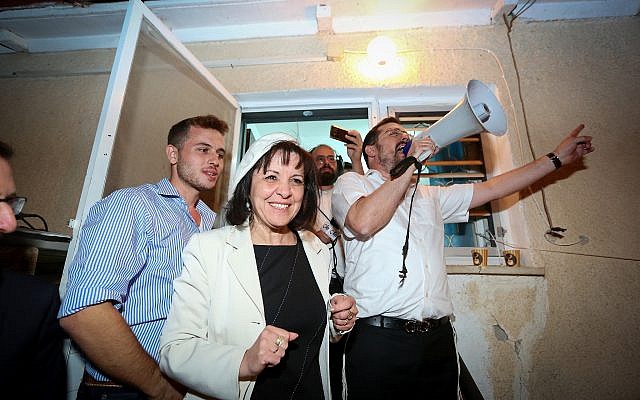
Aliza Bloch (credit: Arutz 7)
I posted a couple weeks ago my prediction that Moshe Abutbul would win by a landslide. And  I was wrong, big time. At this writing, it's a cliffhanger, with Aliza Bloch looking likely to win once absentee ballots are counted.

So, analysis time. Where did I go wrong? My prediction was based on the persuasion principle, that calls to identity are more effective than reasoning. Bloch was campaigning based on her claims that the current management was incompetent and she would do a better job, while Abutbul simply played the "Daas Torah" card, i.e. "I am Haredi and if you are Haredi you must vote for me because the Gedolim say so." I saw that argument as basically irrefutable, and once it was set in stone that it was now a mitzva to vote for Abutbul, he could not lose; no True Believer could vote for Bloch with a clear conscience.

And that was my mistake. I thought there were only two options: Abutbul or Bloch. But there was a third option: simply to stay at home.

(credit: Times of Israel)
My first clue that this was happening came while I was counting votes at a station in the Haredi suburb of Heftziba. The vote count was 367 for Abutbul and 8 for Bloch. That doesn't look very impressive, until you look at the turnout: there were about 780 registered voters in that precinct. For an area that usually turns out 70-80% or more, when you get under 50% of your voters showing up, on a public holiday, and 65% of the rest of the city came to have their say, that's not apathy; that's a protest.

On the one hand, I can still claim a modicum of rightness in my original assessment; the vast majority of Haredim in Beit Shemesh would not actively disobey the instructions they were told emanated from their religious leaders by voting for the other candidate. But the simmering discontent, while not actually bubbling over, translated into a massive, passive no-show, which I contend was the single biggest factor in Bloch's victory. Look at the numbers, extrapolated from my polling station: had the 50% turnout been 75% instead, that's an increase of 50% of Abutbul's votes. So say what you want about maybe a couple thousand Haredim who voted for Bloch, or about a genuinely great get-out-the-vote effort from Bloch's team in the rest of Beit Shemesh; if those 25% of Haredi voters who were supposed to have been in Abutbul's pocket had shown up, that would have been at least an extra 10,000 votes for Abutbul, and a landslide.

(credit: PhysicsWorld.com)
Let that sink in. Ten thousand protest no-shows. That is what I call silent thunder. And the message, as I read it, is twofold. First, it is a stinging slap in the face to the askanim who regard the Haredi population as their obedient foot soldiers who will do their bidding unquestioningly. It says, "We are not yet ready for outright rebellion. But if you try to shove your decisions down our throats, and you don't provide us with the services we deserve, then you are asking too much."

Second, it is an implicit probation for Aliza Bloch. It says, "Don't expect us to be excited about you becoming mayor. We let you win, and you have a chance to prove yourself over the next five years. Do good, and we will let you win again; maybe we'll even support you. But beware: if you put a foot out of line, we will flick you like a fly out of the mayor's office."

Personally, I don't know if I've ever been happier to be wrong. I wish Mayor Bloch wisdom, understanding, blessing and every success in her new job, and hope she will over-perform so much  that in five years' time, even the Daas Torah thumpers will be behind her.

Congratulations, and good luck!

(credit: Times of Israel)

Thursday, October 18, 2018

Needed: a clear Haredi majority in Beit Shemesh

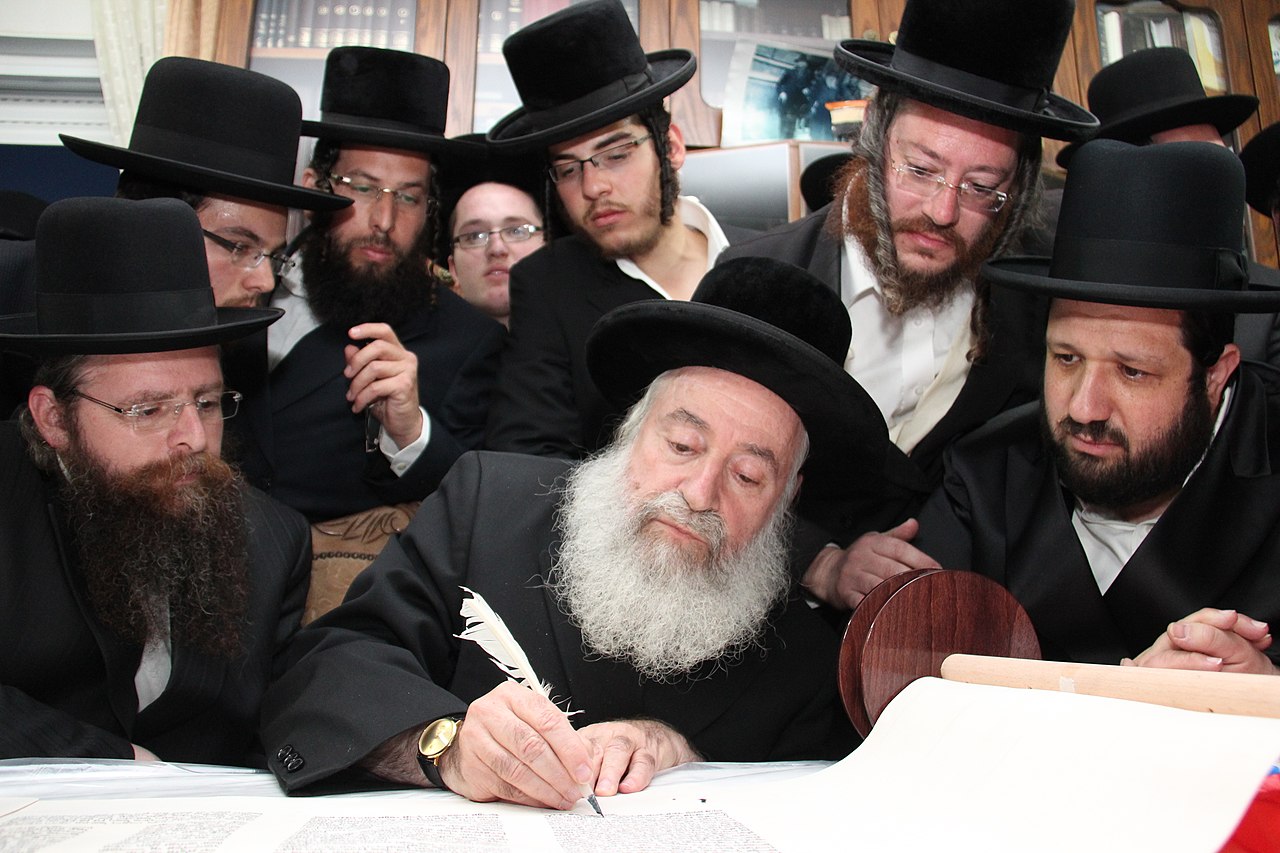
Just stam a picture of some random Haredim
because I like pictures in my blog posts.
Credit: Wiki Commons
That's a deliberately provocative headline, and I mean it--but not for the usual reasons.

Let's take a couple of steps back. We're currently less than two weeks before local council election day, which in Beit Shemesh pits incumbent mayor Moshe Abutbul against challengers Aliza Bloch and Malachi someone-or-other. The fundamentals of the debate are as follows: the Bloch camp claims that Abutbul has done a bad job as mayor, and she will do better; the Abutbul camp claims that he is Haredi and the Gedolim say you must therefore vote for him. And the third guy says something, I think.

I'm not going to bother with analyzing the Bloch camp's arguments, because there are many points to be made in both directions, and it is a fair matter for debate whether Bloch would be a better mayor than Abutbul. Abutbul's claims, however, are incontrovertible: he is verifiably Haredi, and I have no reason to believe he's lying about the endorsements he claims to have received from all the senior Rabbonim that the Haredi community cares about. To simplify it further: Bloch is appealing to voters' reason, while Abutbul is appealing to their identity. And identity always trumps reason, in terms of persuasion.

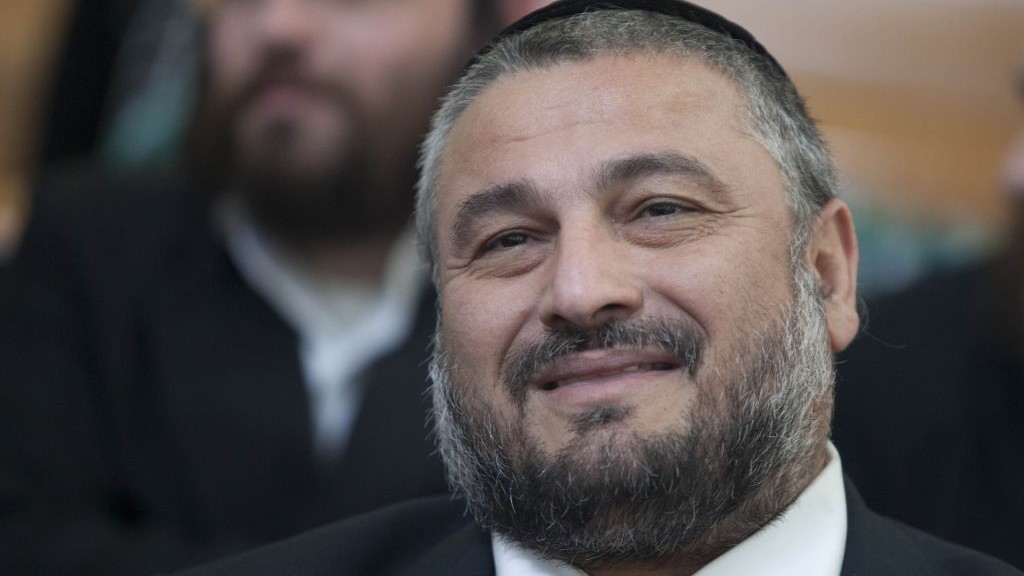
Incumbent mayor Moshe Abutbul
Credit: Times of Israel
My prediction, therefore, is for an Abutbul landslide, with a victory margin of around 10%. The Haredi community is the most disciplined voting bloc in the country (and possibly in the world), and with few exceptions (notably including the Anglo-Haredi sector), once given their marching orders, they will turn out in force and vote as they have been instructed.

This situation is profoundly saddening to me, not because of the likely outcome, but because the election will be decided on tribalism rather than issues. That's not a good thing for a democratic society. But it will continue this way, election after election, as long as the non-Haredi sector keeps putting up candidates who are inherently doomed to fail.

But it's not all bad news. At some point, perhaps even in five years' time, the non-Haredi sector will give up, thus firmly establishing Beit Shemesh as a Haredi-controlled city. At that point, only Haredi candidates will be viable. Consequently, there will be nothing to compete about in terms of tribal identity, which is the most important area to the dominant voting bloc. What's left? They'll actually have to compete on real issues. Wow.

Good news for the Jews!
Credit: Times of Israel
It gets better. Up till now, in a straight Haredi vs non-Haredi fight, the Haredi bloc has actively alienated and even demonized the non-Haredi sector, and vice versa. That's not good for anybody. But once the battle is between only Haredi candidates, the monolithic Haredi vote breaks down, and suddenly the non-Haredi voters become the kingmakers. The candidates will have to court the non-Haredi vote. The mayor will have to deliver for the non-Haredi community. Counter-intuitively, once the city is Haredi-dominated, the non-Haredi residents will wield disproportionate power.

My purpose in writing this is not to convince anyone to vote differently. You should vote for whoever you think is the best candidate. But when Abutbul wins handily, don't lose heart. The bigger his victory margin, the better for all of us, because only when we learn to accept and live with the new reality, that Beit Shemesh is a Haredi-majority city, do we have a chance of moving past tribalism and into meritocracy.

Thursday, October 17, 2013

Two Beit Shemeshes, not on speaking terms

Municipal elections are less than a week away.  For me, they can't be over soon enough.

There have not been, to the best of my knowledge, any truly scientific polls to indicate who will be crowned the Mayor of Beit Shemesh come next Wednesday.  All we know is, it's close.  And we know one other thing: whoever wins Tuesday's election, around half of the city will be jubilant and throwing street parties, and the other half utterly dejected, bitter and resentful.

The thing that has characterized this election campaign the most has been the polarization, the rift in our community, the anger, the hatred, even violence.  From both sides.  And I say that not just to seem even-handed - I've seen and heard people arguing for and against both Eli Cohen and Moshe Abutbul, with fury and venom like I have never seen in them before.  Laws of loshon hora, rechilus, motzi shem ra, nezikin - even Shemiras Shabbos - out the window!   And there is almost nobody in the "undecided" category.  I've never seen anything like this before: nearly everyone I know is vociferously and unswervingly committed to their candidate.  I have not yet had a conversation with anyone who was wavering between the two!  I've witnessed way too many heated exchanges between the two camps, and not one case of anyone changing their mind.  Perhaps the undecideds are afraid to let themselves be known, lest they be set upon by one or the other faction... but I don't know, because they're not saying, and I don't even know if they exist.

This schism in our town truly breaks my heart.  In the end, we're all going to carry on with our lives, and we're going to have to live with our friends and neighbors who voted for the other guy.

Casting my mind back 5 years ago to the previous election, it wasn't like this.  Sure, there was plenty of electoral tension, but it wasn't about Haredim versus Everybody Else.  Moshe Abutbul had plenty backing from secular and traditional parties and communities, which is why he won the election.  And Shalom Lerner was backed by the faction of UTJ that is now the "Koach" party.  When Abutbul won, sure Lerner's supporters were upset, but not so grievously that they contemplated moving out of the city.

What happened?  How is it that in the space of 5 years, our city has fractured neatly down the line: Haredim (with the notable exception of the Tov party) are solidly behind Abutbul, while everyone else is voting Cohen?  It's an important question to ask, because this in itself is probably the most burning issue concerning Beit Shemesh: the relationship between the various sectors of the population.

I was having a discussion recently with an Abutbul supporter, who was earnestly rattling off an impressive list of the achievements over the last 5 years, that benefited everyone, not just Haredim, and he was getting immensely frustrated that people just refused to see the truth of the situation.  I guess he didn't learn Stephen Covey's 5th Habit: Seek to understand, then to be understood.  Did you every ask yourself why, despite everything you've said, the city has split into two practically warring factions?  If you're going to claim that the opening of a bowling alley (a private business initiative) is to the credit of the mayor, then you're also going to have to "credit" the mayor with bringing the relationships between Haredim and Everyone Else to the nadir they are at now: where anti-Cohen ads use Holocaust imagery (implicitly calling Cohen a Nazi), and non-Haredim are openly talking about leaving the city if Abutbul is re-elected.

He answered me: it's just fear.  I wholeheartedly agree.  And I think the same is true for the other side.  The shrill tenor of this whole campaign is because both sides are driven by a wild, visceral fear that the other guy might win and destroy everything for "us" (whoever "we" might be).  But it's not a full equivalence.  The Haredi camp is afraid of Cohen, because he's unknown, is alleged to have connections with the Great Satan (Yair Lapid) and the Little Satan (Naftali Bennett), and he's threatening the benign reign of their patron Moshe Abutbul.  The non-Haredi camp is afraid of Abutbul, because he's known, and whatever explanation you may proffer, they have seen him in action for the past 5 years, and they emphatically do not want a repeat performance.  Do you really want to understand why every non-Haredi party, plus Tov, quit the coalition?  Ask them!  Do you really want to understand why almost every non-Haredi voter who voted Abutbul 5 years ago, is now dreading the prospect that he might be re-elected?  Ask them!

I am certain that Moshe Abutbul is a very good man, and he is totally dedicated to doing the best he can.  But whether intentionally or not, his tenure as mayor has been exceptionally divisive, and bred extremism and hatred between different sectors of the Jewish people.  The results are undeniable: we are a city of two factions, not on speaking terms - and that is the greatest tragedy imaginable.  The fact that this happened on his watch is a gross failure, an offence warranting dismissal.  However much he may have done on paper, whatever endorsements he may bring, whoever tells me "Daas Torah", and however much of a good, sweet and kind person he may be, I cannot vote for Moshe Abutbul.

Many of my friends and neighbors have come to me gushing with effusive praise for Eli Cohen.  He sounds like a good guy, though his marketing is appalling.  I wish I could share their enthusiasm for him, but I don't.  But I will give him my vote on Tuesday, because the only thing I am sure of is that Beit Shemesh needs a new mayor, just to give us some chance of healing.

Perhaps, like me, you are disillusioned and distressed by the tsunami of sin'as chinam that has engulfed our beautiful city, and know that it cannot be allowed to continue in this path - but for whatever reason you cannot bring yourself to vote for Eli Cohen.  I can understand that.  But then, please, don't actively lend a hand to deepening the rift in our society.  Don't vote.  Or vote with a "white slip".  Make that your protest.

And even if you do vote for Abutbul, I still love you, and I'll still be your loyal friend and neighbor.


Tuesday, October 1, 2013

Why I'm voting Likud for city council

First up, before I even get into tachlis, I'm sure there are a bunch of people who read the title of this post and thought, "Why aren't you voting for Eli Cohen?"  For the edification of you newcomers to Israeli municipal elections, you have two votes: one is a yellow slip for mayor (Eli Cohen vs Moshe Abutbul), and one is a white slip where you vote for a party list.  Unfortunately we still don't have any directly elected ward councillors; you vote for a party and the seats on city council are divvied up according to our rather complex system of proportional representation.  So yes, it's a complete no-brainer to vote Eli Cohen for mayor, and I'm not even going to address that angle.  Rather, I'm going to tell you why I'm voting Likud (מחל) for city council.

When I joined Likud, I did so for a national agenda, in order to support Moshe Feiglin. Incidentally, thanks to the efforts of thousands of others like me, Moshe is now a member of Knesset, and doing way better than I ever expected, and the Likud of today is not the spineless Likud that bowed to Ariel Sharon's disastrous disengagement.  But that's beside the point.  My point is, that I never saw the Likud as being that important on a local government level; I thought it much more useful to have representatives on council whom I could trust, who were my neighbors and who would look out for me and my community's interests.  And who were all the Likud representatives on council, anyway?  Predominantly traditional Moroccans from Old Beit Shemesh, with not a heckuva lot in common with me, culturally speaking.  So in the past municipal elections I gave my vote to Anglo parties, so that there would at least be someone on the council representing my culture and values.

This year, however, my perspective has completely changed.  Since becoming a member of the local Likud branch council, I've come to know a lot of these old-time Likudnikim.  To be sure, there's still a big cultural gap between us, e.g. I do often need to ask them kindly not to smoke while we're having our meetings.  But the fact is, they are sincerely and completely dedicated to serving the greater community of Beit Shemesh.  Take a look at this Facebook page for a list of the Likud's achievements over the past 5 years.  And then consider that during that time, the Likud was in the Opposition.  That means it wasn't even their job to be working on these things - but they did it anyway.  And if you ask them why they did all this stuff if they weren't in the coalition, they will look at you as if you just suggested eating falafel with a knife and fork.  That's just what you do for your city!

And it's not for the glory, either.  Everything they did over the past 5 years was done on the quiet.  When Likud Knesset candidate Keti Shitrit mentioned to a group of us Likud Anglos a couple of days ago that the budget for the expansion of Road 38 was secured by Shalom Edri (the local Likud chairman), we expressed surprise, seeing as Mayor Abutbul has claimed that as one of his achievements.  "Mah pitom!  We have a letter from [Minister of Transportation] Yisrael Katz to prove that it was Shalom who convinced him to spare Road 38 from the budget cuts!"  But they never publicized it before.  They never thought to - because they didn't do it for the publicity.  So we Anglos took that letter and gave it the exposure it deserves.

OK, so all I've proved so far is that the Likudnikim are really good people who do a lot of work for the community.  But still, why vote for them when there are so many other really good people running for council - Anglos, people like us?

I agree that many of the other party lists are filled to the brim with amazing people, some of whom are good personal friends of mine.  I wish them every success, I hope they make it to council, and I am convinced that they will serve the community to the very best of their ability.

But the key phrase here is: to the very best of their ability.  If you peruse the Likud's list of achievements, you will notice that the majority of them were achieved because they had the ear of the relevant minister in the national government.  If you have a problem, and you call your friendly local councillor Shmerel from the Anglos Like Me Party, he will certainly listen and do his level best to help out.  He will bang on whatever doors he can in the municipality and try to escalate your issue to anyone who can help out.  But if your problem is, for example, that the road outside your house resembles a moonscape, and the mayor is crying about budget cuts beyond his control, then who does councillor Shmerel call?  He doesn't have the cellphone number of the Minister of Transportation - and even if he did, the Minister wouldn't recognize the caller ID and would let it go to voicemail.  Your call is very important, please leave a message, along with the 327 other people who left me messages in the past 24 hours.  Oh well, I did my hishtadlus...

When Shalom Edri or Moshe Shitrit picks up the phone to any given Likud minister, they answer within three rings.  That's why we have Road 10 today, that's why Route 38 is going to be expanded, and that's why the Orot Girls' School held strong against the extremists and their appeasers.  And why do the ministers care about some activist in some little backwater town?  Because Beit Shemesh is traditionally a Likud stronghold, and the ministers know they have to keep their support base happy.  The stronger the Likud representation is in Beit Shemesh, the greater our importance in the eyes of the Likud-led national government.

I won't say that voting Likud will give you a warm fuzzy feeling - but it's the smart vote if you're looking out for the overall good of Beit Shemesh.

So, that's why I'm voting מחל - Likud on October 22.  I hope you'll consider it, too.


Tuesday, September 8, 2009

The worst form of evil - and how to fight it

As an optimist, I always like to preface negativity with some positivity. So let me start by saying there are a lot of really good people out there. People who love their fellow Jews. People whose observance and learnedness of Torah has brought them to the highest levels of perfection attainable by a human being.

And then there are some pretty nasty people out there. There are the Amalekite types - non-Jews who just hate Jews lishma. Then there are the Achav/Menashe types, also known as mumar l'hach'is (MLH) - real self-hating Jews whose share Amalek's goal of eradicating Judaism, if not the Jews themselves. And we have the more benign (and very common) mumar l'teiavon (MLT) - Jews who don't keep the Torah because it's inconvenient, they are unmotivated, they cannot control their desires, etc. Have I covered everyone?

Apparently not. There's another kind of baddie out there. This one is a talmid chacham. He is G-d fearing, pious, learned and scrupulously meticulous in his performance of mitzvos. He is passionate and fiercely committed to Yiddishkeit. And he is responsible for more death and destruction ר"ל to the Jewish People than any of the previous categories of sinners. Let's hear more about him from the Netziv, Rabbi Naftali Tzvi Yehuda Berlin, in this extract from his introduction to Sefer Bereishis from Ha'Amek Davar (translation mine):
[The Jews at the time of the destruction of the Second Temple] were righteous, pious and labored in Torah. But they were not straight (ישרים) in their conduct. Therefore, because of the causeless hatred (sin'as chinam) for each other in their hearts, they suspected anyone who acted differently from their view of fearing G-d of being a Sadducee and an Apikoros. This led to extremes of bloodshed and the most terrible evils in the world until the Temple was destroyed... Hashem is straight and does not suffer "tzaddikim" such as these... even though their intentions may be for the sake of Heaven, [these "tzaddikim"] cause the destruction of Creation and demolition of settlement in the Land [of Israel].

Yup, this "tzaddik" is responsible for nothing less than the destruction of the Temple, and every pogrom, expulsion, massacre and holocaust that has followed. And worse than the MLT, worse than the MLH, he can never do teshuva; he can never repent. He cannot, because it is physically impossible; he has nothing to repent for - because in his own mind, he is right, and everybody else is wrong.
Do you know anybody like that? I do. I met him online yesterday morning - or at least, I met his blog, after he spammed me (and many others in the Jewish cyberworld, as a subsequent Google search told me). Go ahead and take a look - but be warned: have an antacid and/or a stiff drink at hand, because this site is liable to do something serious to your metabolism. Here it is.

Notice how this guy meets all the criteria of the Netziv. Firstly, with brazen chutzpah, he titles his blog "Authentic Judaism" - in one fell swoop relegating anyone who doesn't agree with every word he says to the status of "non-authentic" and therefore an apikoros. (That's not speculation, by the way - he says so explicitly.) And he doesn't just disagree on issues - he loudly and proudly proclaims his own visceral hatred towards anyone who disagrees with him. He ridicules and insults gedolei Torah in the most despicable terms. All this he does this under the veneer of "hating Hashem's enemies", which everyone agrees is a mitzva. But he makes the logical non sequitur of jumping from "I am for Hashem" (true) to "Anyone who disagrees with me is against Hashem" (false). The site is so crammed with half-truths and non sequiturs, that it doesn't even merit specific critique. It is self-evidently sheker of the darkest, most vindictive variety. This is the yetzer hara with a yarmulke. This is truly the Face of Evil.

So what's a healthy approach to people like this? My first reaction after visiting his site was a powerful urge to vomit. Having calmed down a bit, I find myself filled with a kind of morbid fascination at the psychosis that has possessed this yid - and an icy fear at having felt the heart of darkness, and realizing that there is a very large proportion of "frum" society that shares it.

How do we deal with it? What hope is there for Am Yisrael if this malignant tumor of sin'as chinam has become so deeply rooted in our people that hatred has now become a shita, and aveiros of the worst order are considered mitzvos? We see it frequently, and I don't think I need to enumerate all the ways in which this vile philosophy is manifesting - hameivin yavin.

My Rav quoted to me, "A little light dispels a lot of darkness." Well, we have a lot of darkness out there that needs dispelling. I'd like to say that especially coming up to Rosh Hashana, we should take very great care to love and respect our fellow Jews, especially the ones with whom we have disagreements - but I don't think that's enough. The sin'as chinam machine is working powerfully and grinding away at our society, and I am afraid it's a weak and feckless response just to turn the other cheek and talk about brotherly love. As Edmund Burke said: “The only thing necessary for the triumph of evil is for good men to do nothing.”

I think our society needs a bigger tikkun. How about this: get a bunch of banners printed for people to hang off their balconies: "V'ahavta l're'acha kamocha"; "All Jews welcome in our neighborhood!" etc. Offer a nice sign to be put up at the new mall in Ramat Beit Shemesh (or wherever) to the effect that everyone is welcome, and there will be a zero-tolerance policy towards intimidation and physical or verbal violence; perpetrators will be ejected, by the police if necessary.

What ideas do you have? How do you think we should relate to crackpots like "Rabbi Authentic"? How can we counteract their poison and make a real tikkun olam?

Wednesday, June 17, 2009

Rabbi Horowitz - The System Worked

After all the bad press we've been getting about the sexual molestation issues in our community, at last we have some good news from Rabbi Yakov Horowitz.

Note that in this case, they went straight to the police. Not to the tznius police, the real police. It was handled cleanly, discreetly, and with the full cooperation and support of the local Rabbonus.

Think we could manage that here?

Tuesday, May 26, 2009

Enforcing bicycle safety laws?

I recently saw a police car stopped on a street in Ramat Beit Shemesh.
The officer was standing with a kid on a bicycle, and writing down something.
The child was not wearing a helmet...

I heard a while ago that they had passed a law that allows police to fine the parents of a child who is riding a bike without a helmet.
Can anyone confirm this?
Does my sighting mean that they are now enforcing this law?

If so - kol hakavod to them!

Monday, November 10, 2008

The Great Lerner-Abutbul Debate

Insomniac post follows.  Since my thoughts on the hastily (and very well) organized debate between Shalom Lerner and Moshe Abutbul at Beis Tefilla last night are keeping me awake anyway, I may as well share them with you...
  • Overall I have been very impressed with the decorum and civility between two serious candidates in a very close contest for the mayorship of Beit Shemesh.  At least these two appear to be keeping themselves above the disgraceful smear campaigns that have been conducted by some other interested parties, some of whom I would have expected to know and observe a little bit more about hilchos loshon hora.  'Nuff said.
  • The candidates had to field some very tough questions, and well done to the organizers for not pulling any punches!
  • On the qualifications for mayor, I scored a tie.  Both men have a long and impressive track record of public service, and both were able to present adequate administrative resumes.
  • On who will be able to unite the city more, I think Lerner got the edge.  True, Abutbul can point to his shadow coalition with Labor, Dor Acher, Gimmel and Shas, but that attests more to his ability to wheel and deal politically than his ability to reach out to people who are different to him.  I think Lerner is more accessible personally to more different types of people.  
  • Abutbul played down the issue of the extremists, suggesting that the conflict has been largely instigated by the outgoing mayor for political reasons, and with him (Abutbul) as mayor, he would be able to ease the tensions significantly.  My concern is that he intends to do so by conceding to the biryonim and gently persuading the others that it's all in their best interests.  Lerner is much more aggressive on this point; he made it clear that while everyone's views will be respected and taken into consideration, there will be zero tolerance for violence.  I made that a big score for Lerner.
  • Abutbul's idea of a separate minhelet for RBS is interesting, though not compelling.  I like the idea of having a more personal branch of the iriya, but I'm not hung up on it.  I don't think Lerner had given it much thought; he dissed it by presenting himself as the person to speak to, rather than a decentralized call center of sorts.  Abutbul was very quick to point out that this is exactly what Vaknin did with his "mayor's open line", but  I didn't catch exactly why this was a bad thing.
  • On the youth - well, everyone agreed that it was a high priority, and the debate was more of a "your word against mine" as to who had been more involved and effective in dealing with youth at risk.  Here the debate got a bit caustic from both sides, which I thought was uncalled for.  I have no idea who really has a better track record here, but I thought Abutbul sounded more sincere on this point.  Put it this way: if I was a teenager having an existential crisis and I could choose who to go to for a warm embrace, I'd choose Abutbul.
  • There was a little exchange where Lerner criticized Abutbul for having dished out jobs in return for political support, to such an extent that he had nothing left to offer the Gerrer Chassidim.  Lerner, by contrast, has a practically clean slate, and will be able to appoint people on merit.  Abutbul retorted by saying, "Whoever gets on the bus last has to stand."  This elicited a spontaneous round of laughter and applause from his supporters, but in retrospect it left me cold.  That was basically a public admission that he's planning to be running the same kind of gravy train that Vaknin did.  You support me, I give you a job.  That's pretty cynical, and I thought it was a major gaffe on his part.
  • "Where's the money going to come from?"  Lerner disappointed me here.  While he said all the right things about fiscal responsibility, he came down hard on Abutbul for promising a hospital in Beit Shemesh, which he said was unrealistic given the budget constraints.  That, IMHO, displayed a scarcity mentality and a lack of imagination.  Abutbul responded by citing the example of Teddy Kollek, who supported Jerusalem's budget by fundraising overseas (though I can't remember the figures he quoted).  I don't know if he's right about Kollek, and I don't care if the world is in financial crisis - what struck me here is that Abutbul appears to have vision, creativity and the will to achieve, and all Lerner could do was nay-say it.  Analogies to Obama came to my mind here.  Big score for Abutbul.
  • There were a list of smaller issues, like the Ma"ar, Route 10, techonological development, parking, etc. on which the candidates basically agreed with each other on all points.
  • Abutbul's closing remarks were ordinary to positive; Lerner's were a shocker.  Up until then, the debate had been basically respectful - then Lerner played the race card.  Basically he said that we cannot elect Abutbul - because what will everyone say if a Shasnik becomes mayor?  I actually physically squirmed, because I could not believe he had said that - and nor could a large portion of the audience, who started clicking their tongues disapprovingly.  His intention was to say that it's bad PR for a city to get a Charedi mayor, because non-charedim will get scared off and either move out or not move in.  And you know what - he may be right, but to say it outright like that was in despicably bad taste.  Can you imagine John McCain telling people that they shouldn't vote Obama because a black man is too scary a thought for some people to countenance?  By me, that ranked as the dirtiest comment of the evening - far worse than Abutbul's self-incriminating comment about the first-come-first-served, seats-for-supporters gravy train.  
Overall, I'm now thrown into confusion.  I walked in a Lerner supporter and I walked out undecided.  I guess that means Abutbul won the debate as far as I was concerned.

In summary: Lerner wins on the tough stuff, like dealing with miscreant biryonim and clean governance.  I think he would serve my personal interests better, being that I believe he would develop Beit Shemesh a lot more aggressively in the direction that I envision it - plus he has a strong pro-Eretz Yisrael record and deserves recognition for that.  OTOH, Abutbul is a more  inspiring candidate, who seems to have a lot more of a personal touch, charisma and creativity.  I like the fact that he is willing to dream a bit, because those kinds of visions can become reality.

Right now, I'm still inclined to vote Lerner, despite his closing remarks, and despite his lack of creativity.  I think he'll be a competent mayor, certainly better than the current one, though I have no great expectations of him.  While Abutbul is the more exciting of the two, I'm not comfortable with the company he keeps, and I don't have the warm, fuzzy feeling that his vision for Beit Shemesh and mine are fully aligned.

At the very least, what this debate has done is persuade me that having Abutbul as mayor would not be the worst thing in the world.  I'm voting Lerner, but if Abutbul wins, I won't be too upset, and I'll be watching with great interest to see how he performs.

Monday, October 27, 2008

Don't ask my Rabbi, ask me!

I think I'm going to take a lot of flak for saying this, but this attitude of having to ask your rabbi for his instructions of who to vote for truly gets up my nose.

Last election Rav Shteinman allegedly paskened a chiyuv on every G-d-fearing Jew to vote Gimmel, which placed me in a dilemma, because Rav Ovadia Yosef had already allegedly promised me a chelek in Olam HaBa for voting Shas. And the previous elections I knew that voting for Rav Kaduri ZTzL's flash-in-the-pan party would bring me such unbelievable segulos for mazal, brocha and hatzlocha - how could I not vote for them?  

So now I'm reading the comments on Rafi Goldmeier's Life In Israel blog about how these Rabbis say not to vote for Tov, but others say it's OK, while another bunch privately endorse Tov but feel they can't come out publicly and tell anyone to vote for anyone other than Gimmel.

Marei d'chulei alma! What is this narishkeit?! You have a group of good, koshere Yidden who want to influence the city in a positive direction - but you are paralyzed and unable to exercise your own judgement until the Rebbe has told you what to do! Do you not have a brain of your own? Are you simply a robot who will not act without input from The All Knowing Rabbis? Do you also check with the Rebbe what color granite to use in your new kitchen, or what brand of printer you should buy for your home office?

Yes, there are halachic considerations, and for this the Rabbonim are there to advise us on whether or not Caesar Stone can be kashered for Pesach - but beyond that, the choice is yours as to what color scheme you want to use in the kitchen. Likewise the requirements for someone to be chosen for public office are matters of halacha - and it seems to me that the slates of several parties competing in the Beit Shemesh municipal elections conform perfectly to halacha. In no particular order, the lists of Gimmel, Shas, Beyachad (Mafdal), Chen and Tov all consist entirely of upright, koshere Yidden who are all at least halachically qualified for office, and even the Likud list could arguably fit the definition.

Given that you have a halachically acceptable range of at least five or six choices, it's up to you to decide who will represent your interests best in the city council. Whom do you trust most? Who do you think will be most effective? Whose agenda do you agree with?

Asking the Rabbi for instructions on decisions like this looks like piety, but IMO it is a willful abdication of responsibility. Life is so much simpler if you don't have to make tough decisions yourself and you just leave it up to the Rabbi. Then after 120 years if HKBH asks you, "Why did/didn't you do such-and-such?" you can simply shrug and say, "I just did what my Rebbe told me." And if your Rebbe was wrong or misinformed (am I allowed to suggest such a thing?) you expect that Hashem will say, "Oh well, that's all right, then, I'll punish him instead. You move along to your chelek in Olam Haba now."

I don't believe in self-abnegation and abdication of responsibility; I believe in self-esteem and accountability. Hashem gave us faculties of rational thought, not so that we could delegate our thinking to others, but so that we could use it to understand His Torah and apply it to our daily lives. If we realize that we do not know enough to make an informed halachic decision (and that happens plenty to me!) then we are forced to turn to someone else whom we trust and who is likely to be able to advise us correctly. That's the role of the Rabbi - your trusted spiritual advisor whose advice you rely on to make sure that your Olam Haba is safe. But ultimately, whether or not you choose to follow his advice, only you are accountable for your actions, and after 120 years you will not have your Rabbi shielding you from the Heavenly court; it's just you, your mitzvos, and your non-mitzvos.

I asked one of my trusted spiritual guides recently, "How do I know whom to trust as a spiritual guide?"

His answer, in short, was, "It's very difficult... but I will tell you one thing: if anyone uses the phrases 'Daas Torah' or 'The Gedolim Say' - run a mile! Run a mile, because these are conversation stoppers used by insecure people to squash debate."

There's a lot more space to develop on this theme, but I'll leave it for a later blog entry IY"H. Meanwhile I think I'll hang a Chen poster next to the Shalom Lerner ones on my mirpeset. If I burn in hell for not voting Gimmel, at least it's because that was my choice.