Tuesday, April 2, 2019

Election fun!

Seven talking points about the election on April 9

A lot of people are talking about how disillusioned they are about next week's general election in Israel, how no party really deserves their vote, and how bad and dangerous certain candidates or parties are. I have a different take on things that is a lot more upbeat. Here are seven talking points for your consideration.

1. The polls are (mostly) rubbish

One of the best things that has come out of this election is the legal ruling obtained by the Green Leaf Party early in the campaign, requiring (among other things) that polling companies release their raw data, not just their final calculations. While most of the media doesn't report on the raw data anyway, it's available, and extremely interesting. 

For example, I present you with Exhibit A, the raw data from a Channel 13 poll taken on 28 March:
The leftmost column is the percentage of respondents who chose the selected option; the middle column is the number of seats they are allocated, based on their raw data. Loosely. Very loosely.

The first thing I will draw your attention to is the contrast between the results of UTJ and the New Right. In the raw data, UTJ scored 3.8%, while NR got 3.7%: a virtual dead heat. Yet in the allocation of seats, UTJ gets 7, while NR gets only 5! Now, this is not necessarily gross misrepresentation; after all, UTJ supporters are particularly difficult to poll, since very many of them do not use the Internet, and do not have SMS-capable phones, so it is probably correct to bump their numbers up somewhat. But how much? That's a question for the judgement of the pollsters.

Where it gets a little more dodgy is how Likud (21.6%) and Blue & White (25.5%) both ended up with exactly 30 seats. Or how Zehut (7.5%) and Labour (7.8%) were allocated 7 and 10 seats respectively. I suspect the pollsters are taking the 9.1% of "Undecideds" and allocating them to other parties according to their best judgement. Or according to their own political preferences. Or according to groupthink. Whatever. Whether the data manipulation is innocent or nefarious, it's pretty clear that polling is not an exact science. Expect results that are nowhere near the conventional wisdom.

2. The media hype about the Left/Right blocs is utter rubbish

Cartoon: Philip Whisenhunt, The Commonwealth Times
Every poll gets trumpeted in the media as a scorecard of how many seats are in the "Right" bloc, and how many are in the "Center-Left" bloc. So, for instance, the above poll would be announced as "Right bloc leads 64-56". If they're feeling really adventurous, they might call Zehut the "balance of power", since its leader, Moshe Feiglin, has said he has no preference between Binyamin Netanyahu or Benny Gantz for Prime Minister, claiming that the score is "Right 57-56 Center-Left", with Zehut being the kingmakers. Sounds really close and competitive, right?

Well, it's all utter rubbish, because they are ignoring the fact that the Arab parties are less concerned about serving their constituency than about grandstanding against anything and everything the government does, and will never join any coalition, whether "Right" or "Center-Left". This is a great pity; I've said often that it would be really cool if a right-wing government could co-opt at least one Arab party into the coalition with some harmless portfolio like Minister of Welfare. But it isn't happening any time soon, at least not with the current crop of Arab politicians, so those 11 seats in the poll above are spoilers, and cannot be counted in any "bloc", other than their own. So why does the media keep harping on with this ridiculous scorecard? Because it keeps things exciting; it sounds so much more like a cliffhanger than if they had to tell the truth, which is "Right 64-45 Center-Left".

3. There are no (really) bad scenarios
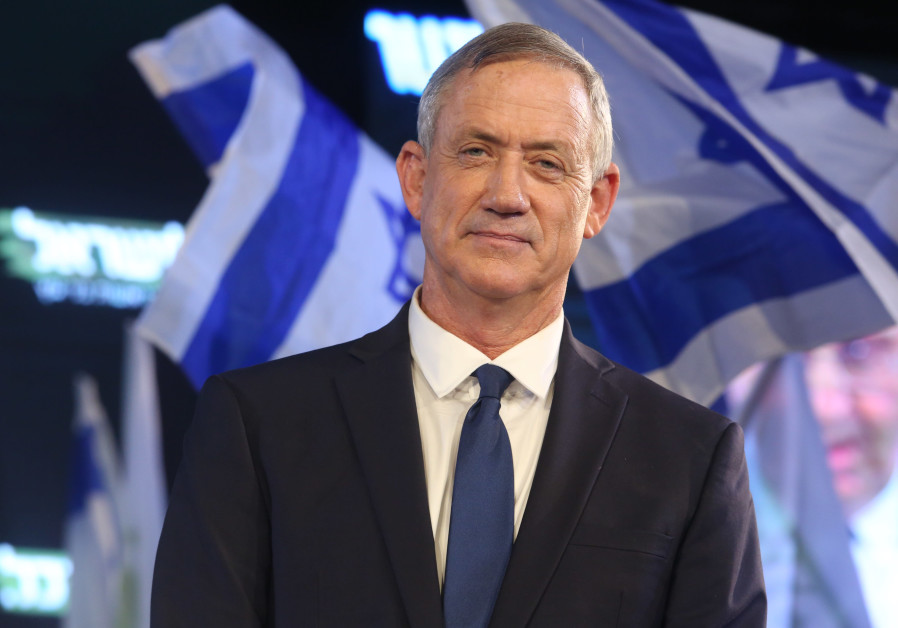
Photo credit: JPost
I don't believe in trash-talking, not even directed against politicians, and I'm not going to start now. Fortunately, I don't feel much temptation to do so, either. I have friends who support almost every one of the major parties, and I have not attempted to persuade them otherwise, because all the party lists contain some excellent people, who really love Israel, and sincerely want to do their best for the country. They also have a lot of candidates I don't like, but it's unrealistic to expect to like every single candidate on your party list. I may disagree with their approach, but who's to say I know better than them? At the very least, I don't see anyone on the map who both (a) has an agenda that I believe will be seriously detrimental to Israel, and (b) will likely have the power to implement that agenda. The most serious concern I have is that the Blue-and-White party might install a trade union boss as finance minister, but I don't see that as a realistic scenario. As mentioned above, it seems to me that Netanyahu is a shoo-in to form the next government, but if it happens to be Gantz, I'm not too concerned; he would almost certainly have to rely on Feiglin to make his coalition, and Feiglin's price will include the Finance Ministry. Having Feiglin in the government also assuages any concerns I might have that a Gantz-led government would do anything too reckless on the diplomatic front. So, barring some kind of black swan event, I'm pretty relaxed about whatever outcome this election yields.

4. Zehut is a game-changer

That brings me to Feiglin and Zehut. Without getting into arguments for or against any aspect of their platform, I think it's fair to say that Zehut's entry into Israeli politics is a massive game-changer. Firstly, the fact that they even have a manifesto is, amazingly enough, unprecedented. Every other political party only has a list of personalities; you vote for the people and hope they do in office what they intimated they might do while they were campaigning. Zehut has a 344-page platform, spelling out exactly what policies they have committed themselves to. We'll see how good they are about following through on their commitments once they're in office, but one way or another, I hope more parties do the same in future, rather than asking us to close our eyes and open our mouths.

Just one of hundreds of Zehut memes
Secondly, Zehut has whipped up both support and opposition to levels of near-hysteria. You can't post a kitten video on Facebook, without some Zehutnik friend of yours commenting about how life will be better for cats once Zehut runs the country, see page 271 of the platform #מצביע_זהות. To which your Meretz friend responds, calling the Zehut friend a messianic fanatic who wants to build the Third Temple. Then a United Right friend accuses him of being a pothead who wants to destroy Judaism in Israel, followed by a Likudnik berating Feiglin for his anticipated betrayal of the Right, while a Blue & White supporter says Zehut is a dangerous cabal of extreme Rightists who will bring the apocalypse down on our heads. Seriously. Somehow, Zehut has stirred up the pot so much, that literally every other political party feels threatened by them, and the accusations against them are diametrically opposite, depending from direction they originate. That itself speaks volumes. Plus, it's hugely entertaining.

Thirdly, no party before has gone so hard for the jugular in terms of their libertarian agenda to root out the ugly vestiges of socialism in Israel. They are aiming for the Finance Ministry, and there is good reason to believe they will get it. And from there, I am very optimistic that they will liberalize the economy, removing the protectionism, tariffs, and other obstacles to the individual's economic success. Bring it on.

To the people who are worried about Zehut's proposed solution to the Palestinian issue, I get that concern. But, much like Blue & White's union boss is unlikely to become finance minister, I don't see Zehut dictating foreign or security policy any time soon, and they haven't prioritized those issues on their agenda. They're going for finance and education, and in both of those fields, I think they will be an excellent force for good.

5. There is life after Netanyahu
Credit: Wikimedia Commons
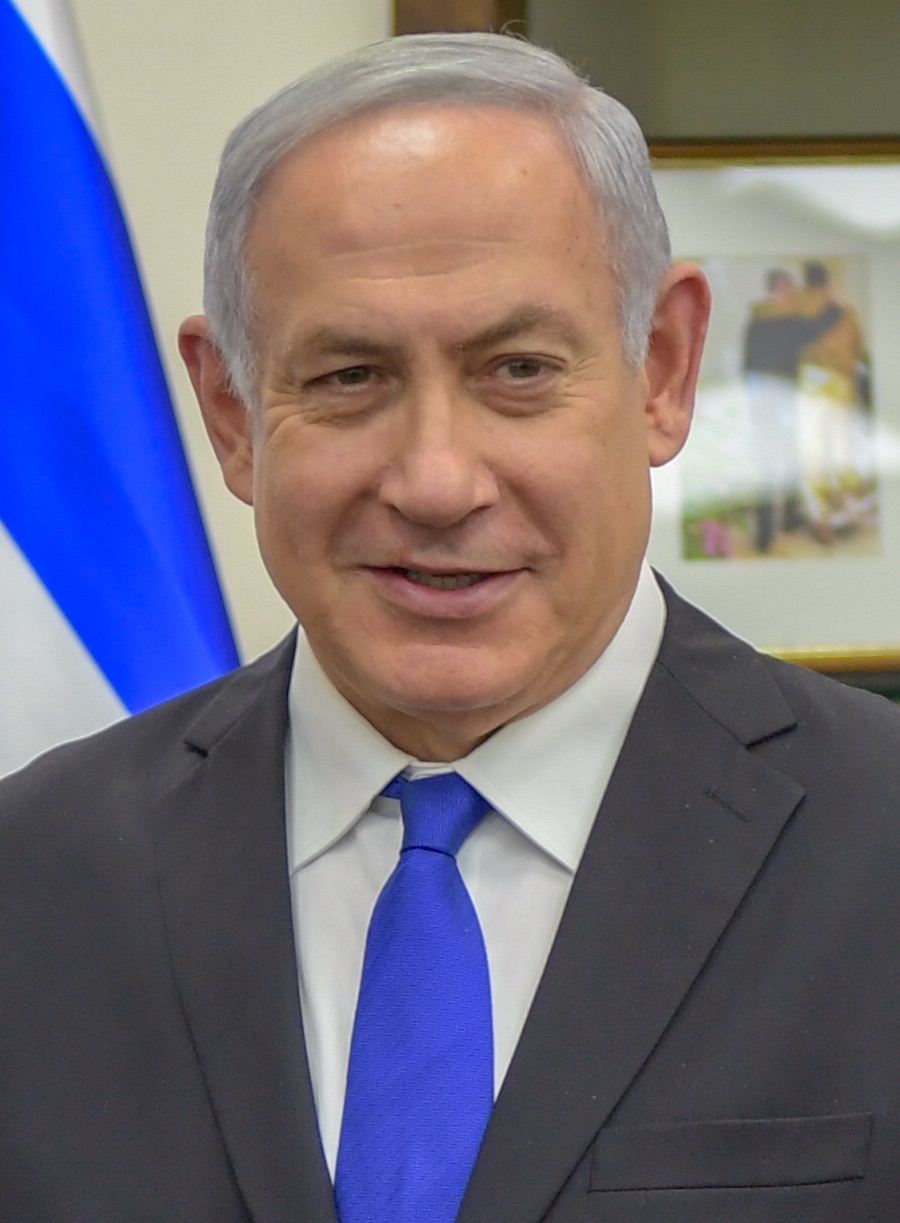
The election has been complicated by the legal cloud hanging over Netanyahu's head, though that doesn't seem to have affected his likelihood of reelection much. Nonetheless, the indictment against him carries some serious weight. Noah Roth posted an excellent and balanced analysis of the case here, and its really worth reading. 

The bottom line is that even after winning the election, Netanyahu could well be forced out of office. And if he is, the next prime minister will likely be determined by primary elections within the Likud. Are you a Likud member? If so, you may be treated to the privilege of directly electing the next leader of Israel. And despite the fact that many first time voters don't even remember a time when Israel had a prime minister not called Binyamin Netanyahu, everything will be OK. There are a lot of very good and highly qualified candidates in the Likud, and even some who speak English as well as Bibi. Netanyahu has been a very good prime minister, in my opinion, but even without his legal issues, he should have been term-limited. It's not good to have the same person in power for too long, and some fresh leadership might be nice.

6. Not much else will change

As mentioned above, Zehut's likely takeover of the Finance Ministry has potential to make some big impact on the economy. Plus, they've made cannabis legalization a sine qua non condition of entry into any coalition, and nobody is really that strongly against it, so I think it's safe to say we'll soon see pot on sale in pharmacies within the next year.

Other than that, I don't see many other policy initiatives making much headway. The Charedi parties will likely be indispensable to any coalition, so I cannot foresee any major changes to the status quo as far as social or religious legislation is concerned. The Likud will remain in control of security and foreign policy, so expect more of the same there. Ayelet Shaked is banging war drums against the High Court, but I don't foresee her achieving much more of a judicial revolution in her next term of office than she did in the first one. 

The really big unknown factor, of course, will be the unveiling of Trump's Middle East Peace Plan. I have no idea what's in it. Those who do know, aren't saying, and those who say, don't know. But that's one thing that has the potential to set the cat among the pigeons.

7. Relax, everything will be fine!
Credit: Chabad.org
This election is characterized by the fact that there aren't really any probable nightmare scenarios, which hasn't always been the case in past elections. Most of the candidates are actually pretty decent, and whatever happens, things will be fine.

It's not worth getting into heated debates on social media. Our relationships with our friends and neighbors will continue past April 9; it's really not worth burning them over one or two votes here or there.

Shalom al Yisrael!

Thursday, November 1, 2018

Silent Thunder

Aliza Bloch (credit: Arutz 7)
I posted a couple weeks ago my prediction that Moshe Abutbul would win by a landslide. And  I was wrong, big time. At this writing, it's a cliffhanger, with Aliza Bloch looking likely to win once absentee ballots are counted.

So, analysis time. Where did I go wrong? My prediction was based on the persuasion principle, that calls to identity are more effective than reasoning. Bloch was campaigning based on her claims that the current management was incompetent and she would do a better job, while Abutbul simply played the "Daas Torah" card, i.e. "I am Haredi and if you are Haredi you must vote for me because the Gedolim say so." I saw that argument as basically irrefutable, and once it was set in stone that it was now a mitzva to vote for Abutbul, he could not lose; no True Believer could vote for Bloch with a clear conscience.

And that was my mistake. I thought there were only two options: Abutbul or Bloch. But there was a third option: simply to stay at home.

(credit: Times of Israel)
My first clue that this was happening came while I was counting votes at a station in the Haredi suburb of Heftziba. The vote count was 367 for Abutbul and 8 for Bloch. That doesn't look very impressive, until you look at the turnout: there were about 780 registered voters in that precinct. For an area that usually turns out 70-80% or more, when you get under 50% of your voters showing up, on a public holiday, and 65% of the rest of the city came to have their say, that's not apathy; that's a protest.

On the one hand, I can still claim a modicum of rightness in my original assessment; the vast majority of Haredim in Beit Shemesh would not actively disobey the instructions they were told emanated from their religious leaders by voting for the other candidate. But the simmering discontent, while not actually bubbling over, translated into a massive, passive no-show, which I contend was the single biggest factor in Bloch's victory. Look at the numbers, extrapolated from my polling station: had the 50% turnout been 75% instead, that's an increase of 50% of Abutbul's votes. So say what you want about maybe a couple thousand Haredim who voted for Bloch, or about a genuinely great get-out-the-vote effort from Bloch's team in the rest of Beit Shemesh; if those 25% of Haredi voters who were supposed to have been in Abutbul's pocket had shown up, that would have been at least an extra 10,000 votes for Abutbul, and a landslide.

(credit: PhysicsWorld.com)
Let that sink in. Ten thousand protest no-shows. That is what I call silent thunder. And the message, as I read it, is twofold. First, it is a stinging slap in the face to the askanim who regard the Haredi population as their obedient foot soldiers who will do their bidding unquestioningly. It says, "We are not yet ready for outright rebellion. But if you try to shove your decisions down our throats, and you don't provide us with the services we deserve, then you are asking too much."

Second, it is an implicit probation for Aliza Bloch. It says, "Don't expect us to be excited about you becoming mayor. We let you win, and you have a chance to prove yourself over the next five years. Do good, and we will let you win again; maybe we'll even support you. But beware: if you put a foot out of line, we will flick you like a fly out of the mayor's office."

Personally, I don't know if I've ever been happier to be wrong. I wish Mayor Bloch wisdom, understanding, blessing and every success in her new job, and hope she will over-perform so much  that in five years' time, even the Daas Torah thumpers will be behind her.

Congratulations, and good luck!

(credit: Times of Israel)

Thursday, October 18, 2018

Needed: a clear Haredi majority in Beit Shemesh

Just stam a picture of some random Haredim
because I like pictures in my blog posts.
Credit: Wiki Commons
That's a deliberately provocative headline, and I mean it--but not for the usual reasons.

Let's take a couple of steps back. We're currently less than two weeks before local council election day, which in Beit Shemesh pits incumbent mayor Moshe Abutbul against challengers Aliza Bloch and Malachi someone-or-other. The fundamentals of the debate are as follows: the Bloch camp claims that Abutbul has done a bad job as mayor, and she will do better; the Abutbul camp claims that he is Haredi and the Gedolim say you must therefore vote for him. And the third guy says something, I think.

I'm not going to bother with analyzing the Bloch camp's arguments, because there are many points to be made in both directions, and it is a fair matter for debate whether Bloch would be a better mayor than Abutbul. Abutbul's claims, however, are incontrovertible: he is verifiably Haredi, and I have no reason to believe he's lying about the endorsements he claims to have received from all the senior Rabbonim that the Haredi community cares about. To simplify it further: Bloch is appealing to voters' reason, while Abutbul is appealing to their identity. And identity always trumps reason, in terms of persuasion.

Incumbent mayor Moshe Abutbul
Credit: Times of Israel
My prediction, therefore, is for an Abutbul landslide, with a victory margin of around 10%. The Haredi community is the most disciplined voting bloc in the country (and possibly in the world), and with few exceptions (notably including the Anglo-Haredi sector), once given their marching orders, they will turn out in force and vote as they have been instructed.

This situation is profoundly saddening to me, not because of the likely outcome, but because the election will be decided on tribalism rather than issues. That's not a good thing for a democratic society. But it will continue this way, election after election, as long as the non-Haredi sector keeps putting up candidates who are inherently doomed to fail.

But it's not all bad news. At some point, perhaps even in five years' time, the non-Haredi sector will give up, thus firmly establishing Beit Shemesh as a Haredi-controlled city. At that point, only Haredi candidates will be viable. Consequently, there will be nothing to compete about in terms of tribal identity, which is the most important area to the dominant voting bloc. What's left? They'll actually have to compete on real issues. Wow.

Good news for the Jews!
Credit: Times of Israel
It gets better. Up till now, in a straight Haredi vs non-Haredi fight, the Haredi bloc has actively alienated and even demonized the non-Haredi sector, and vice versa. That's not good for anybody. But once the battle is between only Haredi candidates, the monolithic Haredi vote breaks down, and suddenly the non-Haredi voters become the kingmakers. The candidates will have to court the non-Haredi vote. The mayor will have to deliver for the non-Haredi community. Counter-intuitively, once the city is Haredi-dominated, the non-Haredi residents will wield disproportionate power.

My purpose in writing this is not to convince anyone to vote differently. You should vote for whoever you think is the best candidate. But when Abutbul wins handily, don't lose heart. The bigger his victory margin, the better for all of us, because only when we learn to accept and live with the new reality, that Beit Shemesh is a Haredi-majority city, do we have a chance of moving past tribalism and into meritocracy.

Wednesday, March 11, 2015

Machiavellian vs Zen voting

You would think it would be a simple thing deciding who to vote for: just find the party whose principles resonate most with you, or whose past performance has impressed you the most, and vote for them.  Easy, isn't it?

Well, no.  Both Likud and Machaneh Tzioni are arguing that you should vote for them, rather than their smaller natural allies, to ensure that they are the largest party in the knesset, and will therefore be given the opportunity to form the coalition.

Fortunately that canard is easy to debunk, as I have done before, but despite the incontrovertible evidence provided by real life experience as recent as Kadima's 28-27 "victory" over Likud in 2009, the media persists in maintaining this false narrative, so many people swallow it because of the Availability Cascade cognitive bias (i.e. the more you repeat a given statement, the more people tend to believe it is true).

But now I have another dilemma.  I fundamentally disagree with Eli Yishai's economic and social platform, and I find Baruch Marzel a little too extreme even for my tastes.  But I would prefer for these two fellas to be in the Knesset rather than a couple of extra left-wingers.  And here's the rub: according to the last polls released before the 7-day blackout on surveys before election day, Yachad is hovering on the edge of the electoral threshold.  If they make it over the required 3.25%, they will have at least 4 seats.  If they don't, those 4 seats will be divvied up proportionately among those who did make it.  Which means, assuming a roughly 50-50 split, that 2 of their seats will go to people I strongly disapprove of.

Under normal considerations, my single vote cannot be more than the tipping point for one Knesset seat to change hands (or bottoms).  In this case, however, my vote could constitute the tipping point for 4 whole seats!  So maybe I should refrain from voting for my first-choice party, and rather vote for a party that would otherwise be my fourth or fifth choice, just to help them get into the Knesset and strengthen the overall "right wing" bloc?  The argument is not without merit, even if it's not compelling.

But then... there's the law of unintended consequences.  For example, not so long ago everyone was calling for Bashar al-Assad to be deposed in Syria.  Now all of a sardine, everyone's gone quiet on that score.  What happened?   Islamic State, of course.  Who ever thought there could arise and even more vicious, cruel and despotic regime than Assad's?  Yet if he had fallen when the hounds were out for his blood, all the indications are that IS would have taken full control of Syria, as they have in Iraq where the West deposed another cruel and bloody dictator, and we would have had the richest, best equipped, most full-tilt nut-job Islamist terrorist organization in the world massing on our border.  Good thing we didn't get what we wanted, huh?

Similarly I could make the case that, Netanyahu's capacity for Churchillian oratory notwithstanding, perhaps the best thing for Israel is for him to lose power now, and Herzog to become prime minister?   Bear with me on this.  It's not too difficult to conjure up a scenario where Netanyahu would do a Sharon, and make a suicidal deal with the Palestinians.  So half the Likud would revolt -  big deal!  He would be able to pass the deal with the support of the Left and the Arab parties.  Herzog, on the other hand, has no such leeway, because as PM he would be battling everyone to the right of him, plus he would have a few security hawks in his own coalition who would need some serious persuasion.

Also, Netanyahu is right now the unchallenged leader of the Right.  He's unchallenged, because nobody can challenge him.  What, try depose a charismatic and powerful sitting prime minister from your own camp, who is received with wave after wave of standing ovations in Congress?  Obama didn't ever get that kind of reception, even when the Dems controlled Congress.  Moshe Feiglin challenged Netanyahu, and look how that worked out for him.

But if he were to lose, it would open up the playing field to other leadership contenders.  Herzog would maybe be able to hold together a coalition for two years, at the outside, and then we'll be back to new elections.  This would allow a new rising star to take over the leadership of the Right, perhaps someone more ideologically driven, with a fresh perspective and new momentum.  Like Feiglin, or Naftali Bennett, or who knows who else?  Maybe even Tzipi Hotovely?  It might be worth a couple years of watching Herzog trying to keep his government together, once the hate-Bibi glue has expired, and now all the conflicting demands of his coalition partners start playing off against each other.  Heck, the entertainment value of that might even be the payoff by itself!

I'm not trying to predict the future here or advocate a contrarian voting position; that's not the point.  All I'm saying is, there are so many different ways that things can play out, and trying to go Machiavellian on it is not guaranteed, or even highly probable, to lead to a better outcome; in fact, it could backfire seriously.

So I've made my decision: I will be a Zen voter, and simply vote for the party I feel best represents my views, and let the chips fall where they may.  And I respectfully submit that you should do the same.


Thursday, February 5, 2015

It's election time - and I don't care!

For a person like me who is usually almost OCD about following the polls and election news, this is a completely new and liberating experience:  I have almost no interest in the daily reports about our upcoming elections.  I arrived at this happy place when I realized that it simply doesn't matter.  All the hype in the media about the day to day incremental polling trends, and what this politician says about that one, is irrelevant.

It's frankly a little embarrassing to see so many intelligent people making so much noise about whether the "Zionist Camp" or Likud will get more seats, as if that makes any difference.  Like, don't they remember what happened in 2009?  Kadima under Livni got one seat more than Likud under Netanyahu.  Does that mean they won?  No; Kadima got the most seats by cannibalizing votes from their natural coalition partners, Labor and Meretz.  So when it came time to form a coalition, Livni was stranded, and Netanyahu became Prime Minister again.  So too today: even if Yitzhak Herzog gets a couple seats more than Netanyahu, it won't make a shred of difference: the only thing that counts is how many total Knesset seats he will be able to command for a coalition.  And in those stakes, Netanyahu is king.  Between his natural coalition partners (Bayit Yehudi, Yisrael Beiteinu, Koolanu, Ha'Am Itanu) and the Haredi parties, their total poll numbers have consistently been hanging around the 70 mark, give or take a couple.  (Link to a great poll-of-polls analysis over time here, thanks to DG and ED.)  So barring some really major "black swan" event, I think we can pretty safely say that the large print of the day-after reports will probably read "Netanyahu re-elected Prime Minister".

The small print may be of slightly more interest, but not much.  The biggest swing factor will be whether Ha'Am Itanu makes it over the bar, but otherwise the trends are pretty much in a holding pattern.  A handful of seats may be swinging between various parties, but the overall picture is consistent: the government will once again be formed of a hodgepodge of medium and small parties.  They will thrash out a coalition agreement that nobody will be particularly happy with, and within a year or two, the government will once again fall due to internal bickering, and we'll be back at the polls.

Even if I'm wrong, and Herzog does manage to cobble together a majority of the Knesset to support a coalition under him, I don't really care.  His coalition would somehow have to include even more fractious partners, like Lapid with the Haredim, or Liberman with Meretz.  They wouldn't be able to do anything significant or dangerous, and the government wouldn't last long enough to give Livni even a day at the helm.

Netanyahu's proposed legislation to change the electoral system may or may not pass, but once again, it won't matter.  I know I'm pitting my intelligence against a guy who reportedly has a 180 IQ, but I simply cannot fathom how he thinks it will help to crown the leader of the largest party as Prime Minister automatically, even if he can't form a majority coalition.  Does it mean that the government will be able to pass laws even without a majority?  That's unthinkable; it means the Knesset might as well pack up its bags and go home, and you're effectively stuck with a dictatorship for 4 years.  But if you do need a majority to pass laws, then how will it help if the nominal Prime Minister cannot command that majority?  If anyone can educate me as to what subtle point I am missing, I'll be most grateful, but right now this idea looks pretty asinine.

So the cycle will repeat itself, returning to elections every couple of years that produce the identical outcome as the time before, with minor power shifts and flavor-of-the-month "centrist" parties rising and falling, until maybe someone significant decides to pursue the idea of switching to district representation, an event for which I have faint hope, for reasons I have explained before.

Perhaps my most compelling reason for getting excited about elections in the past was because each time was an opportunity for Moshe Feiglin to get elected.  He did, and performed superbly - and then he got ousted by the Likud and is not running in these elections.  So I really do have no horse in this race.  I haven't decided who I'll vote for, and when I do, I probably won't feel any need to advertise or proselytize, because it won't make any difference overall.  I do hope Feiglin will return to the scene with credible force next time around, because I think he's the one person who really has potential to shake up the system.

But until then, I'm watching the elections as a movie-goer watches an entertaining historical film.  Without any emotional involvement, without any need to trash-talk anyone, relaxed, and happy!


Saturday, December 13, 2014

My Election Challenge

A few days ago a friend of mine remarked to me how much he hates elections.  "We're going to have three solid months of sin'as chinam now," he lamented.  I have been reflecting on his words, and thinking, does it really have to be this way?

A few months ago, the whole of Israel was united as one for 18 days, while we searched and prayed for Eyal, Gilad and Naftali.  כאיש אחד בלב אחד - like one person with one heart.  It didn't matter if you were secular, Dati Leumi or Charedi, left-wing or right-wing.  And we were all broken hearted together when the terrible news became known.

Why should it be that we can only be united when we are faced with crisis and tragedy?  Why should we shatter that unity just because we are choosing a new government?

Think positive - Talk positive - Be positive
Let's fantasize for a few minutes.  Imagine that for the next three months of electoral campaigning, all parties and candidates would present themselves with compelling and positive arguments why you should vote for them, without demonizing, excoriating, ridiculing, lambasting or even criticizing their competitors.  Imagine complete mutual respect between all political parties, and everyone being particular to disagree about issues, and never descending to ad hominem attacks, let alone smearing entire communities.  Imagine if all of us armchair political commentators, on blogs, Facebook and talkbacks, would hold ourselves to this standard of always writing respectfully and gracefully, really trying to understand the other person.  And where we must disagree, then agree to disagree - and yet always treat the other as befits a tzelem Elokim, someone created in the image of God.

את חטאי אני מזכיר היום; I confess I have been guilty of publicly besmirching political figures in the past.  I therefore wish to apologize in the same forum for my past transgressions.  I am sorry for speaking loshon hora and adding fuel to the fire of baseless hatred.  And I undertake to change my ways.  Any time I feel the need to post something, I will keep my contributions as much as possible to the positive presentation of good ideas, and if I feel the need to criticize something, I will weigh up if it is really necessary and beneficial to air my views in public, and if it is, I will confine myself only to arguing about the issues, and never attacking the person.

I hope you will join me in this.  The satan is already rubbing his proverbial hands in glee, in anticipation of all the division and hatred that usually accompanies election season.  For every person who is able to overcome their nature and restrain themselves from saying or writing things that will increase machlokes, but rather relates to people with whom they disagree with honor and respect, we will surely increase the merits of Am Yisrael.  And who knows?  Maybe our reward will be a that we get a stable, functional government whose leaders and ministers will likewise care for the needs of all sectors of the population.  That idea sounds almost like Messianic times, doesn't it?


Wednesday, December 3, 2014

The Kachlon Conspiracy

Rafi asks a great question:
If Moshe Kachlon is so smart and talented, and I think he probably is, along with charismatic and dynamic with leadership abilities, why is he starting a new party?
I mean, doesn't he see how all these new parties were basically one-time wonders and then faded into obscurity? even the most successful of them all, Kadima, barely made it through two elections.. why does he think his party will be any different? He should have stayed with the Likud.
The worst part of it is that a guy like Kachlon, and the big names who I am sure will be on his list, will soon fade into obscurity just like those all before him, and that would be such a loss to the political system.
I was originally going to answer in the comments on his blog, but the more I thought about it, the more I figure the answer deserves a blog entry of its own.

My answer is not that Moshe Kachlon isn't smart or talented.  It's that Binyamin Netanyahu is extremely smart (he reportedly has an IQ of 180), and knows how to plan for the future.

First up, let's rewind a few years to before the previous elections, and put ourselves into the shoes of a genius-intelligence Prime Minister.  You look at the polls and conclude that you're going to sort-of win the coming elections, but be stuck with yet another scrappy coalition.  Every election it's the same thing: some new one-hit-wonder party claims to represent the disaffected "center", "middle class", or whatever, and walks off with a chunk of swing seats that is big enough to make or break a coalition.  This time it's Yair Lapid.  Last time it was Olmert with Kadima.  Before him was Tommy Lapid and Shinui.  And all of them come with their demands that you simply cannot ignore when drawing up your coalition agreement.  Wouldn't it be nice if for once, just once, the new kid on the block turned out to be someone who is ideologically aligned with you, and will actually play nicely once he's in government?

Hmm... thinks... what if, what if... what if I had to prepare already now for the election after this one?  I'll have to make do with a coalition with Lapid this time around... but why not prepare the ground already for next time, and have someone friendly lined up, ready to take the swing votes?  But who?  Someone popular, someone whom I can trust... wait!  What about... Moshe Kachlon?  We'll have him resign gracefully from politics for the time being... make noises about how we regret his decision and hope he'll reconsider... and then next election, he can start his own party, ride on the his popularity that we'll cryogenically freeze now... and he can take the regular 15-20 seats reserved for the flavor-of-the-season "centrist" party... and then yesh lanu esek!  No more need to lean on whiny, treacherous coalition partners... at last we will have a stable government!

So what do you think of this benign conspiracy theory?  Here are some backup facts: Moshe Kachlon is a stalwart Likudnik, whose economic and social views to date have been very much in line with Netanyahu's.  He's not your typical "centrist"; in fact, he was one of the 13 Likud loyalists who voted against the Disengagement.

If I'm right, Kachlon will be given a very senior position in the coming coalition.  And as to the point Rafi raised that he will disappear into obscurity at the next elections - that's only if he doesn't merge his party into the Likud, and grab a spot at the top there.

But then what will be with the next election?  Who will grab the "center" vote if Moshe Kachlon is tainted by his return to the Likud?

Why, Gidon Saar, of course...